
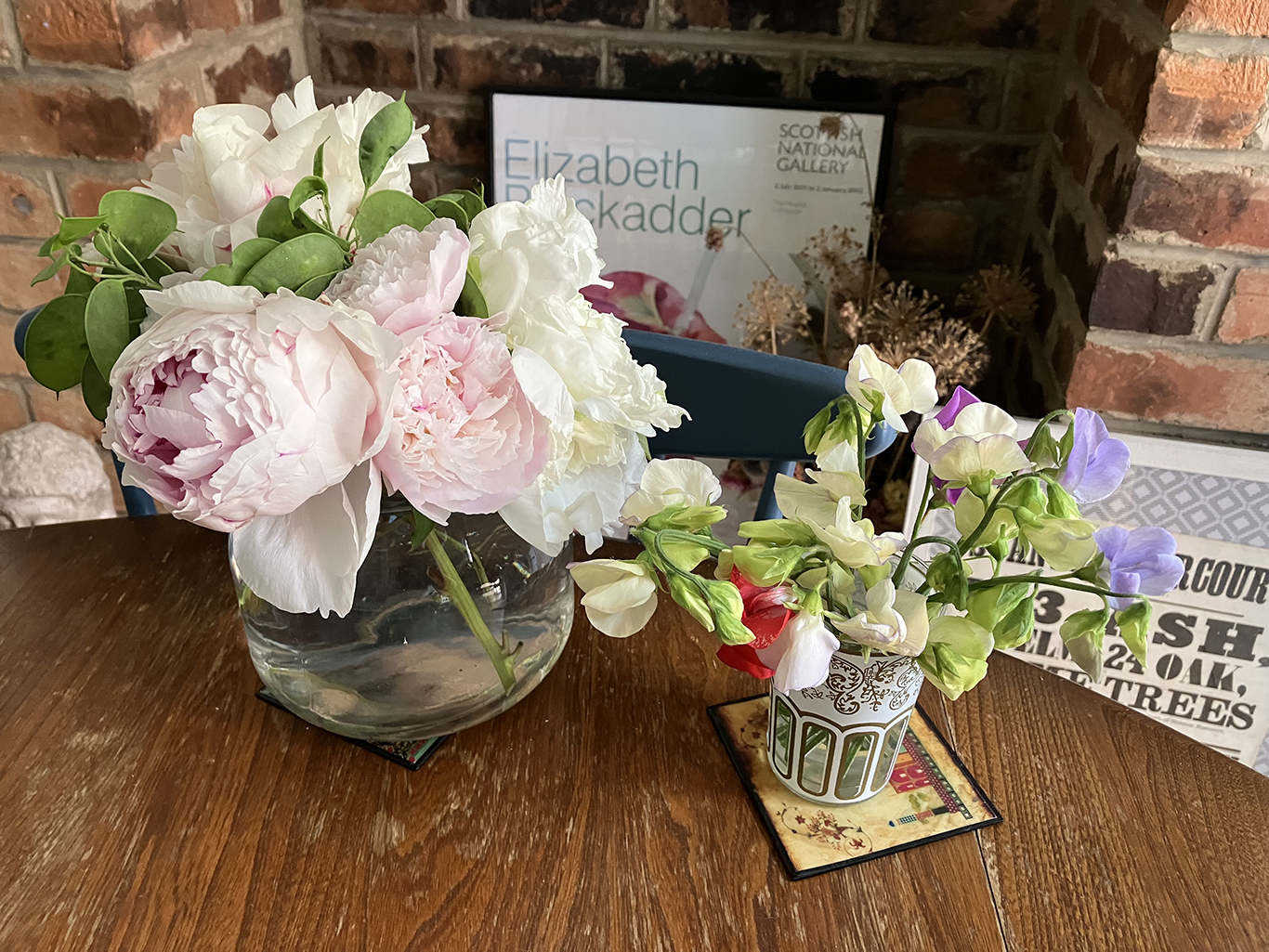
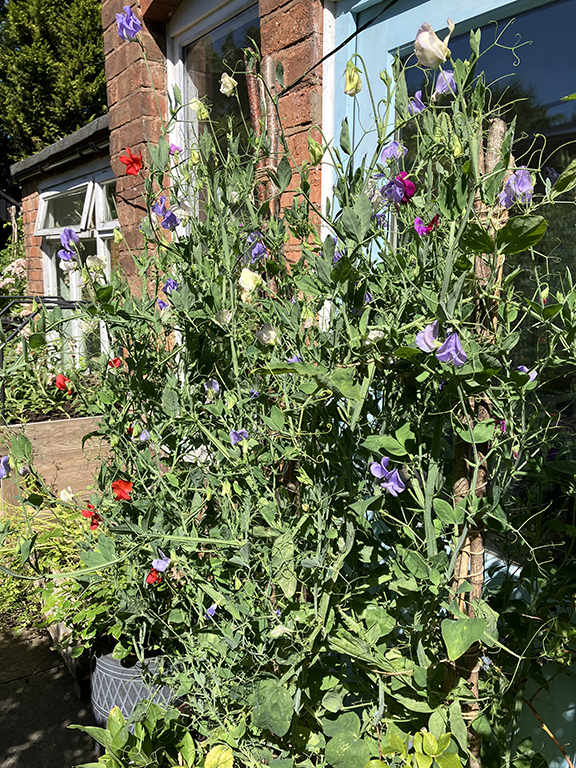
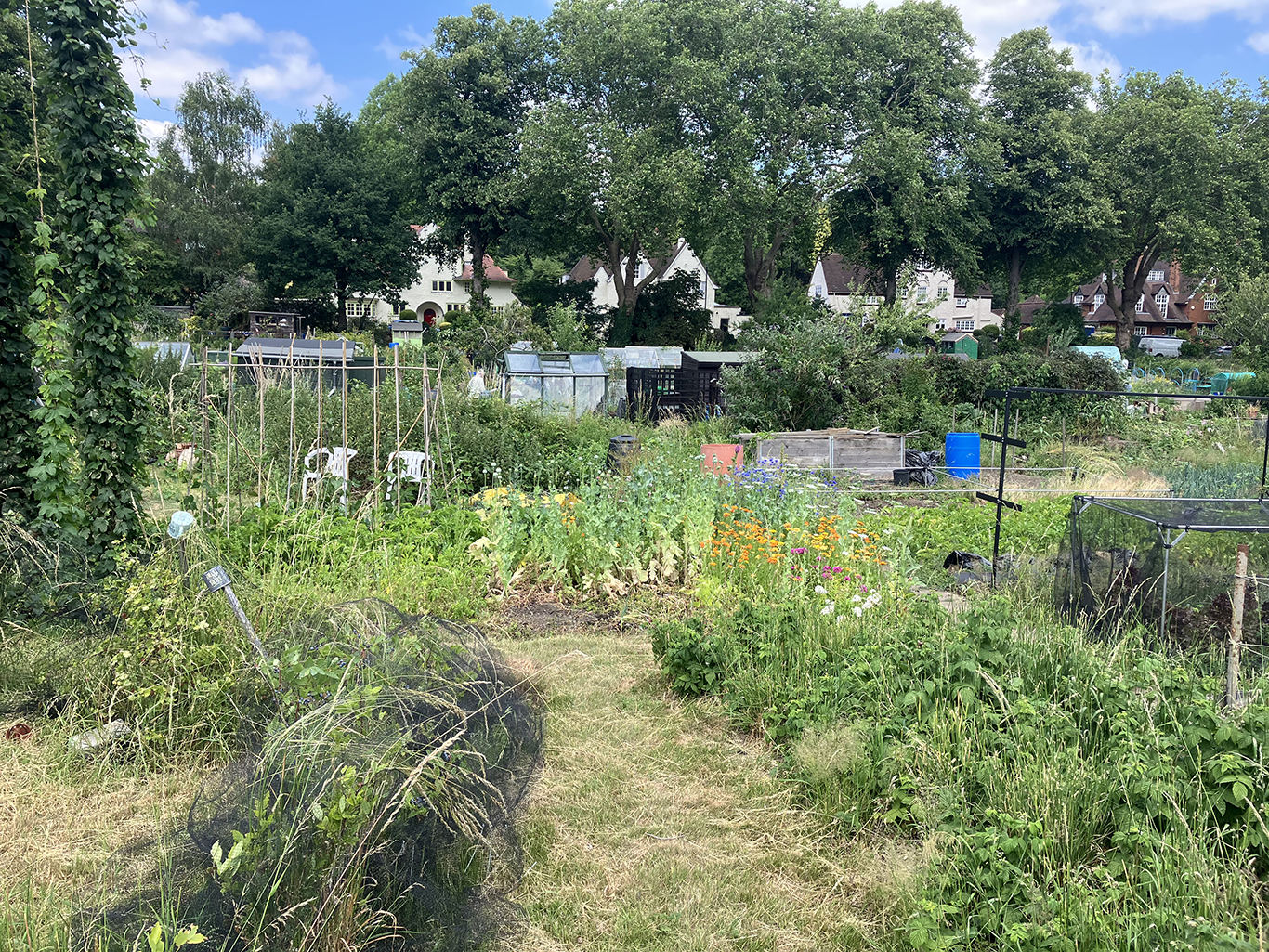
It’s hard to believe that July is upon us, for it feels only minutes since the spring equinox. The ground remains bone dry, which for some is a hindrance, but here is a blessing – no slug apocalypse to speak of this year, the veg is clean and abundant, and the flowers! What a June it was for roses, and peonies too. This is the first year I’ve been able to cut peony stems for the vase, and their gentle sweet rose fragrance was a revelation. The sweet peas have been good too, flowering now for about a month and still going strong. I have mine in two very deep pots near the back door so that I can keep on top of the watering, and every other day I am able to pick a little posy for the house.
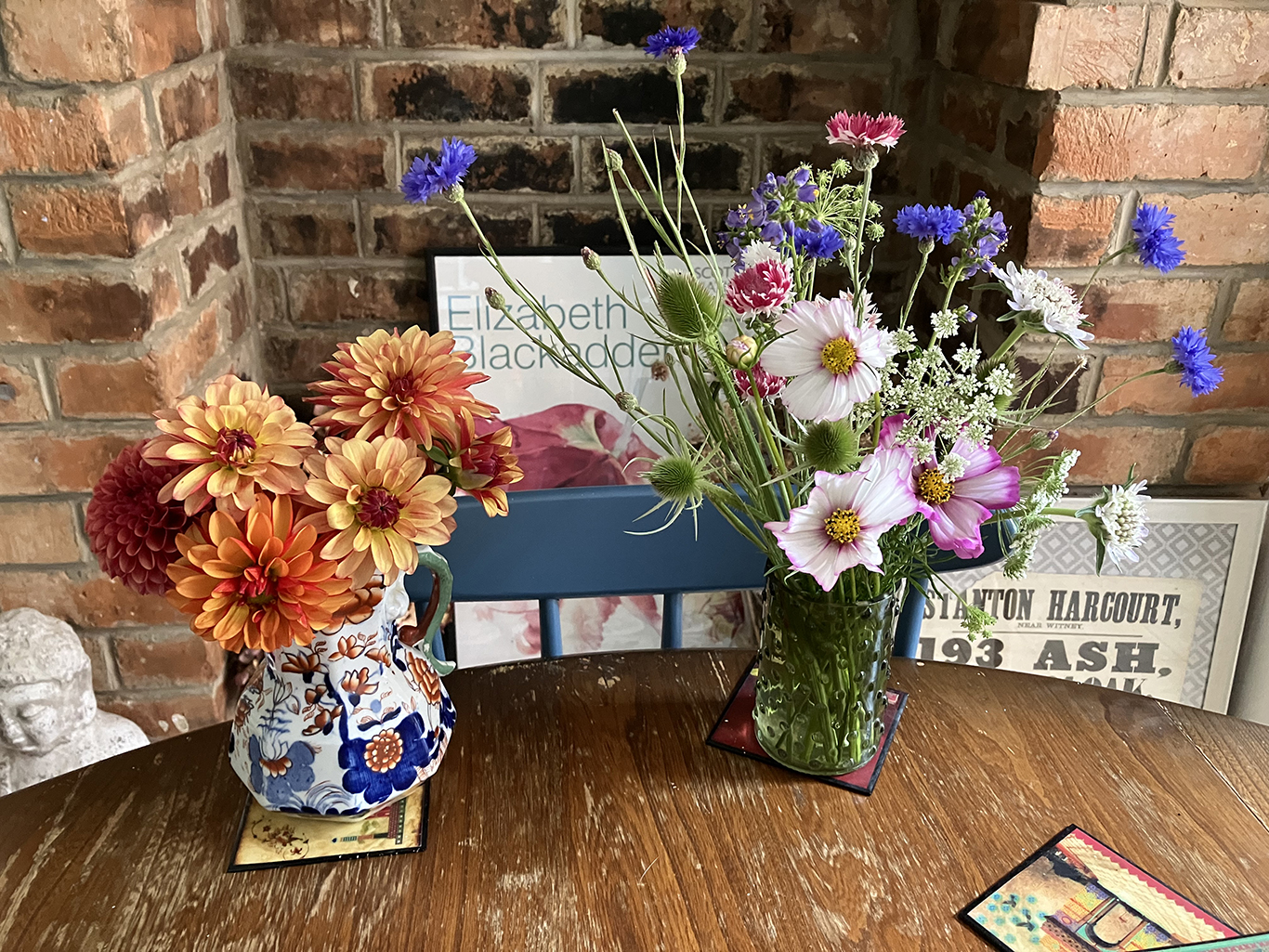
There’s dahlias too this year, which is a pleasant surprise. Because of the slug-based destruction last year, I lifted all the tubers from the allotment, with no idea what was what, and my Mum then potted some up (I suspect with hope rather than expectation). The result is a lucky dip of dahlias which so far has given these complementary earthen tones of both ball and decorative shapes.
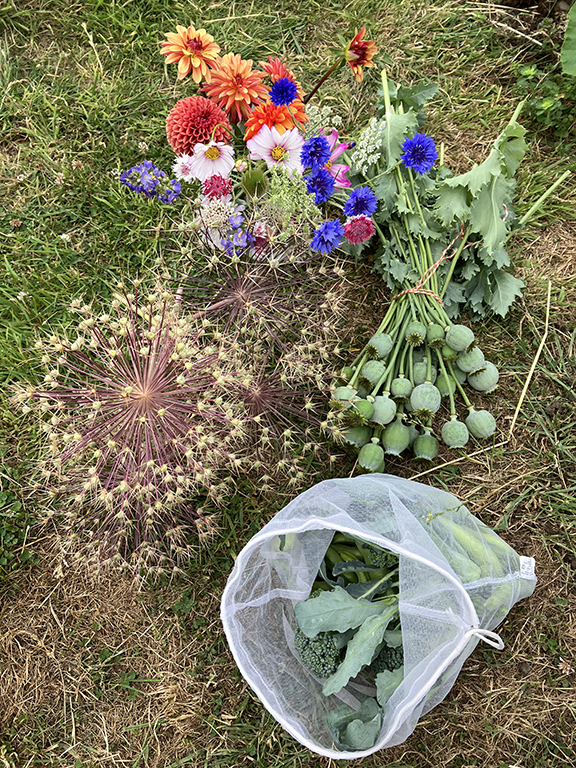
As ever, what looked a bit unpromising at the start of June has finally blossomed into what Harry calls ‘a proper garden’. The squash are venturing forth with their exploratory stems, and the cosmos have tripled in size. The autumn-sown cornflower were a triumph, their bright blue flowers a happy contrast to the airy ammi and the deep green broad beans. Planting like this is always a happy aesthetic accident – I plant seedlings into gaps, everything cheek by jowl, with only the loosest of plans. Sometimes it works and sometimes it doesn’t. French climbing and dwarf beans are now cropping (this is early for us) and there’s a fine harvest of chard and perpetual spinach. Not too much either, which is good; a glut is a disaster in my book, and the aim must always be to crop little-and-often.
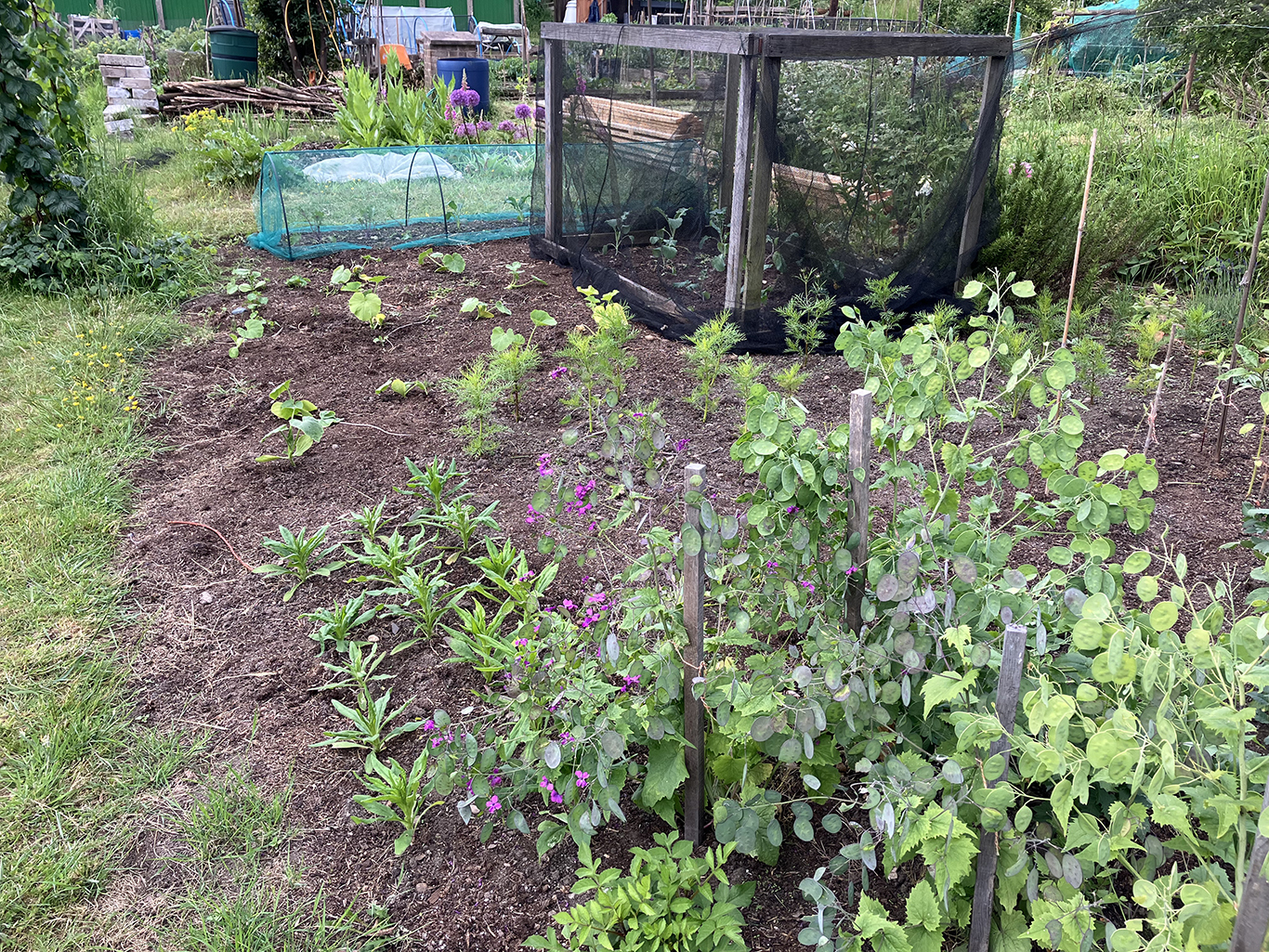
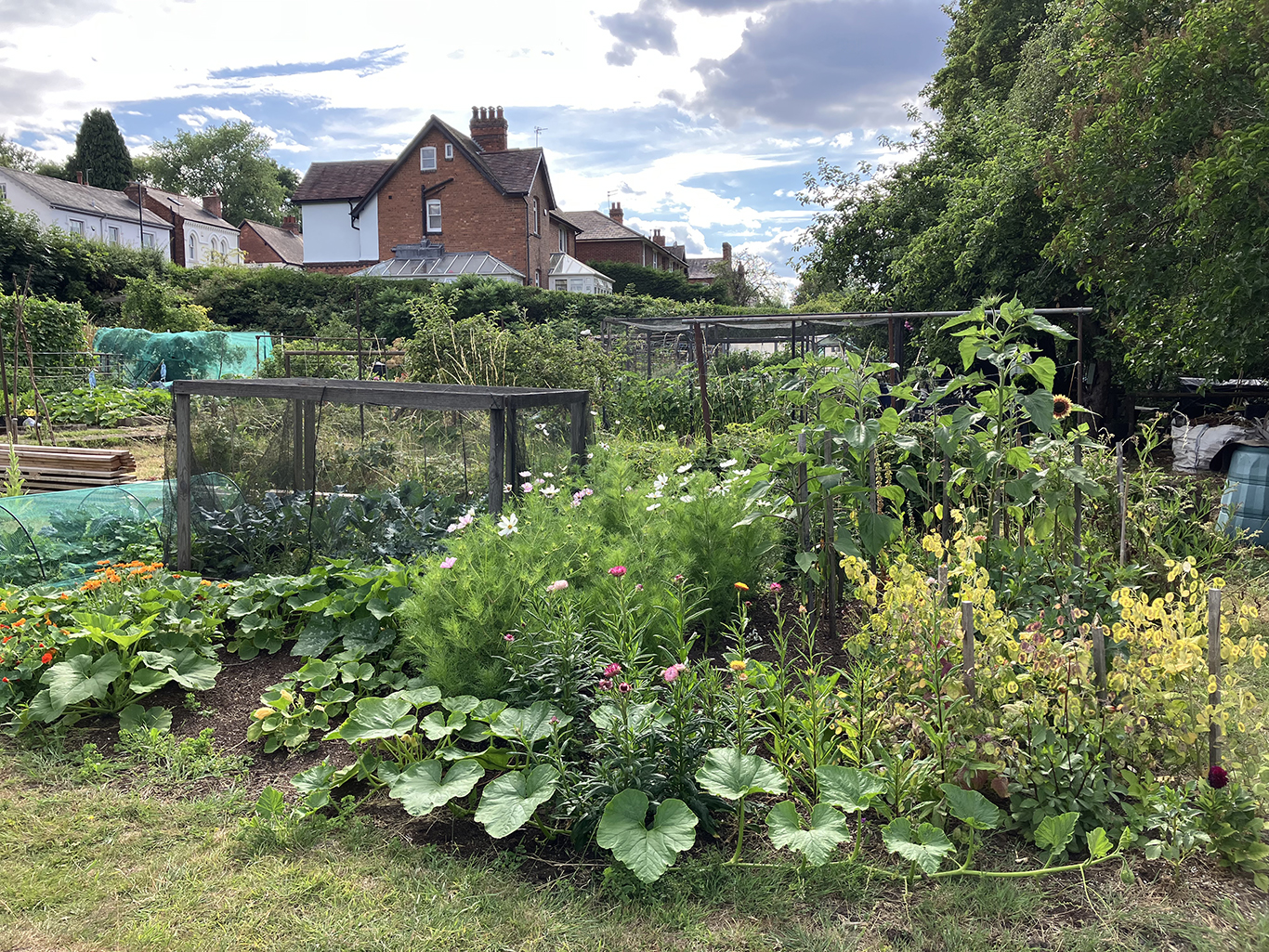
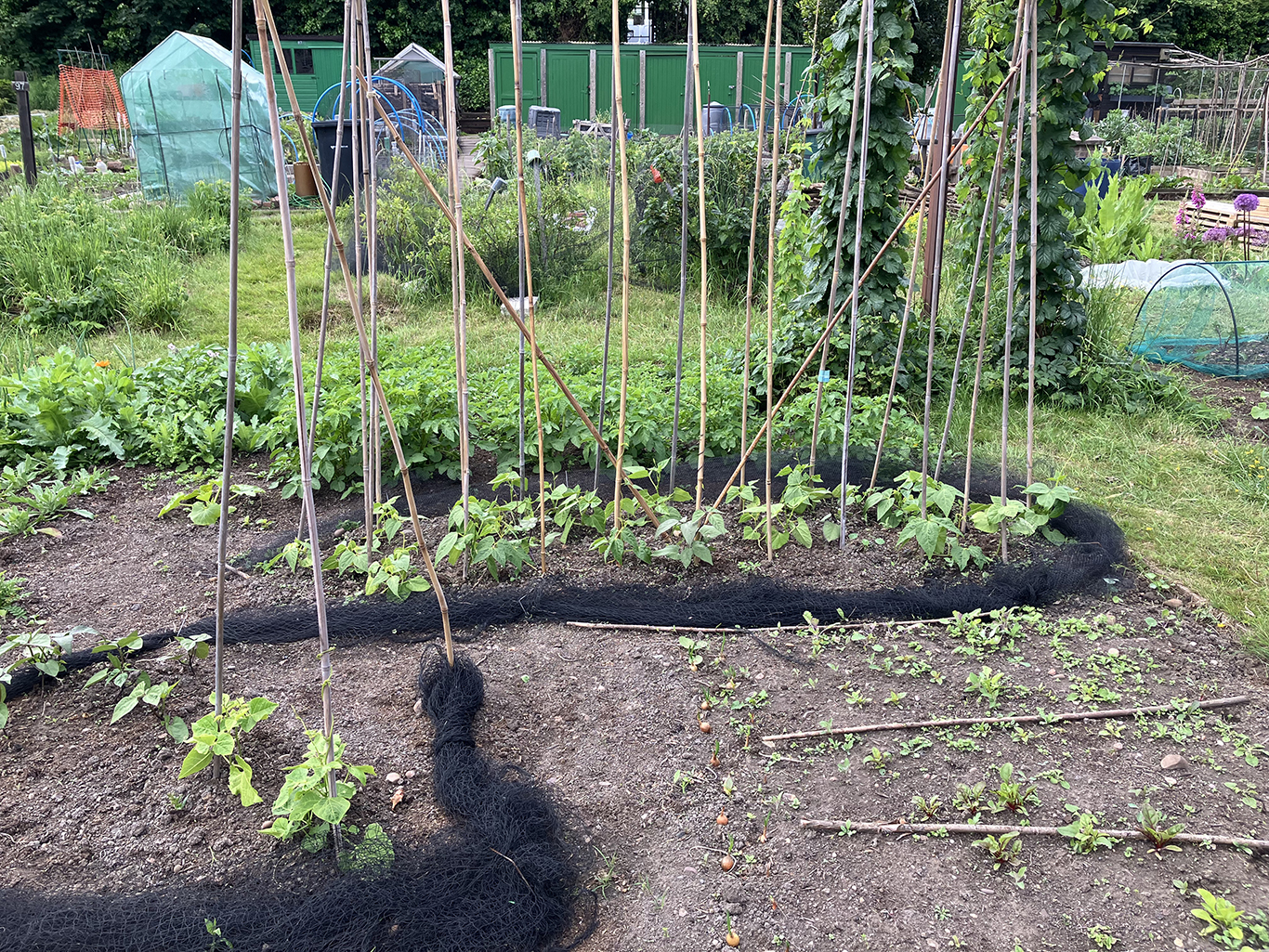
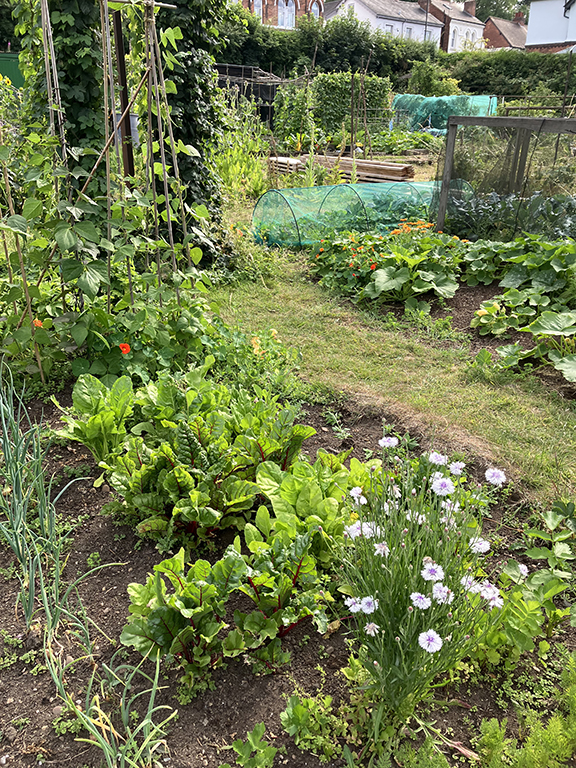
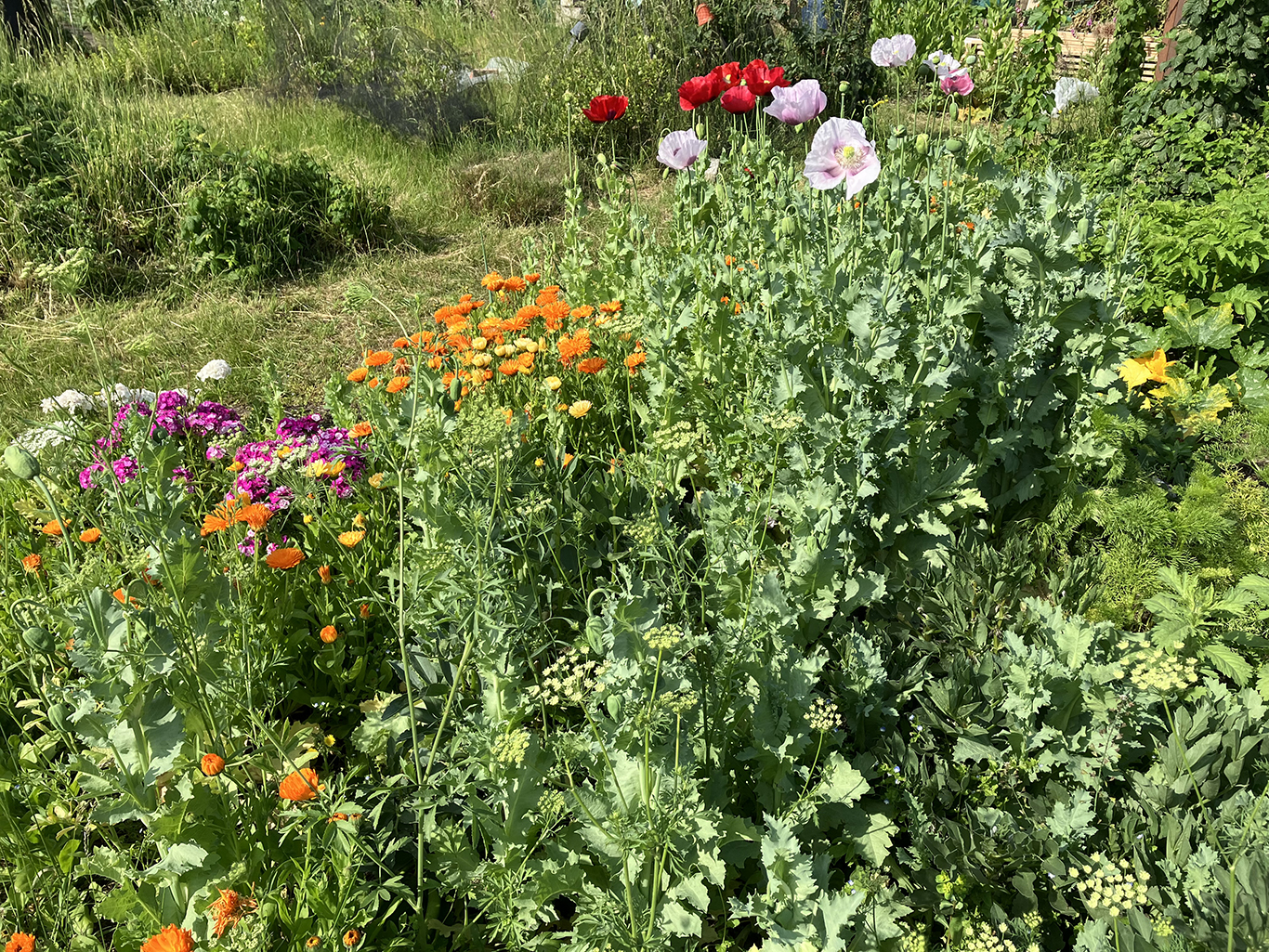
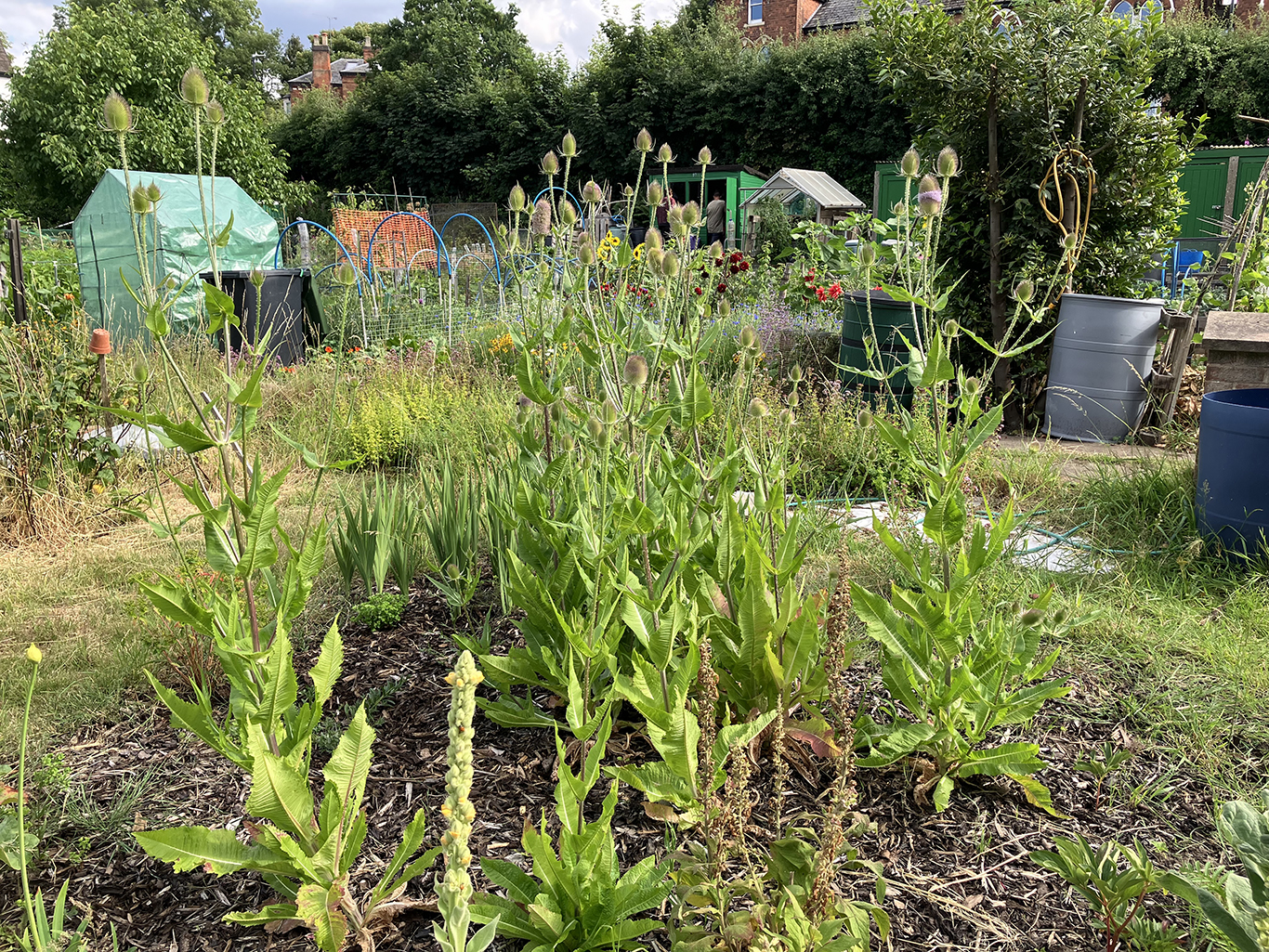
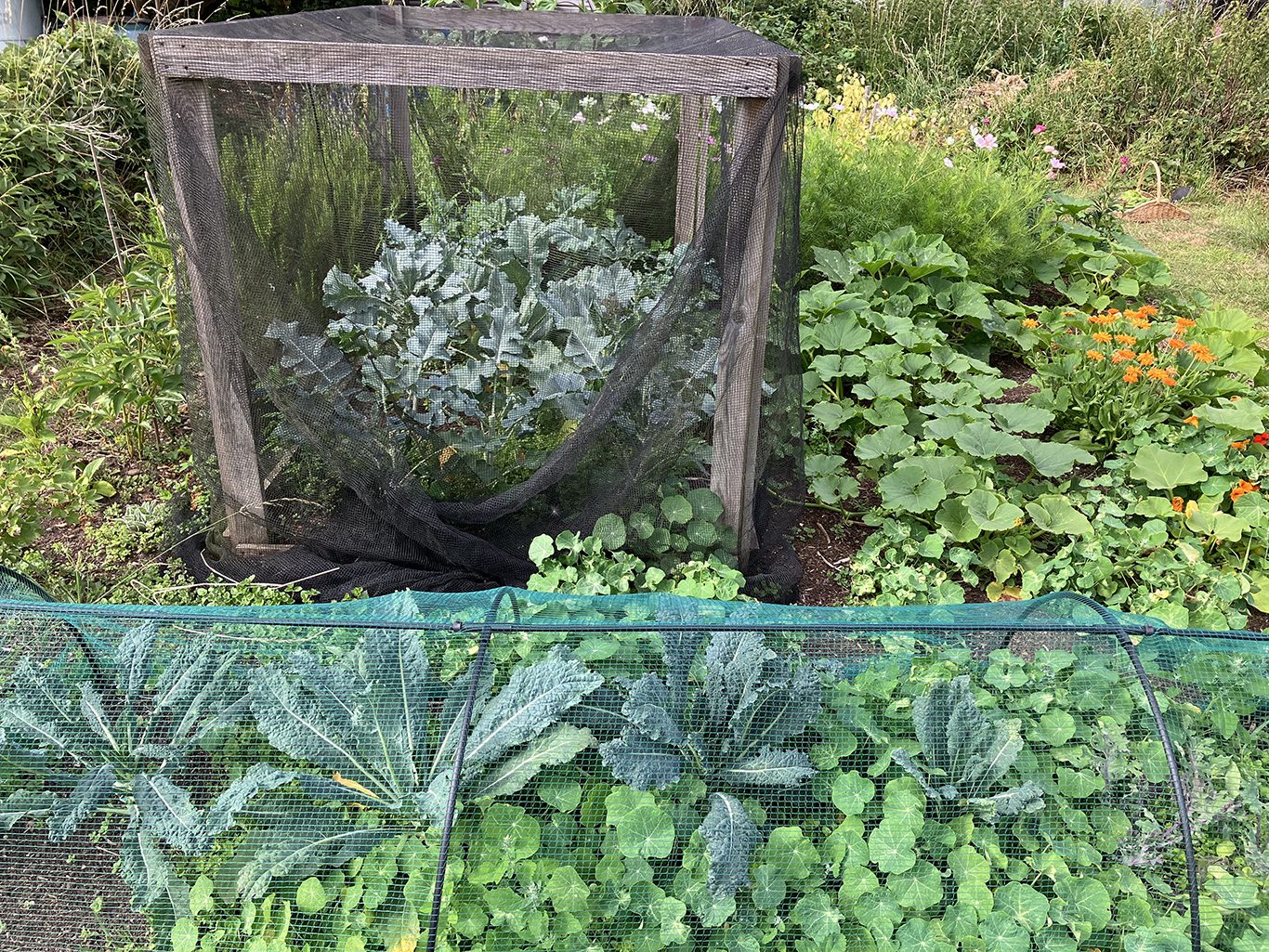
Now it’s 7 July and the early flush of summer colour is fading, with poppy heads standing tall, cornflowers going over and the self-sown calendula fading. I’ll let them seed a little, then will take them out – but what to replace them with? I have some seedling perennials waiting for a home – helenium, artichoke, angelica – so perhaps that is the answer, or maybe it’s time to try another green manure.
There’s still plenty of cropping left to come, with the snapdragons and sunflowers only just starting, and gladioli and chrysanthemum still to bloom. Plus weeks of French and runner beans, cavolo nero, tender stem broccoli, new and main crop potato, courgettes, squash, raspberries and gooseberries. I say this not to boast, more at the wonder of it all!
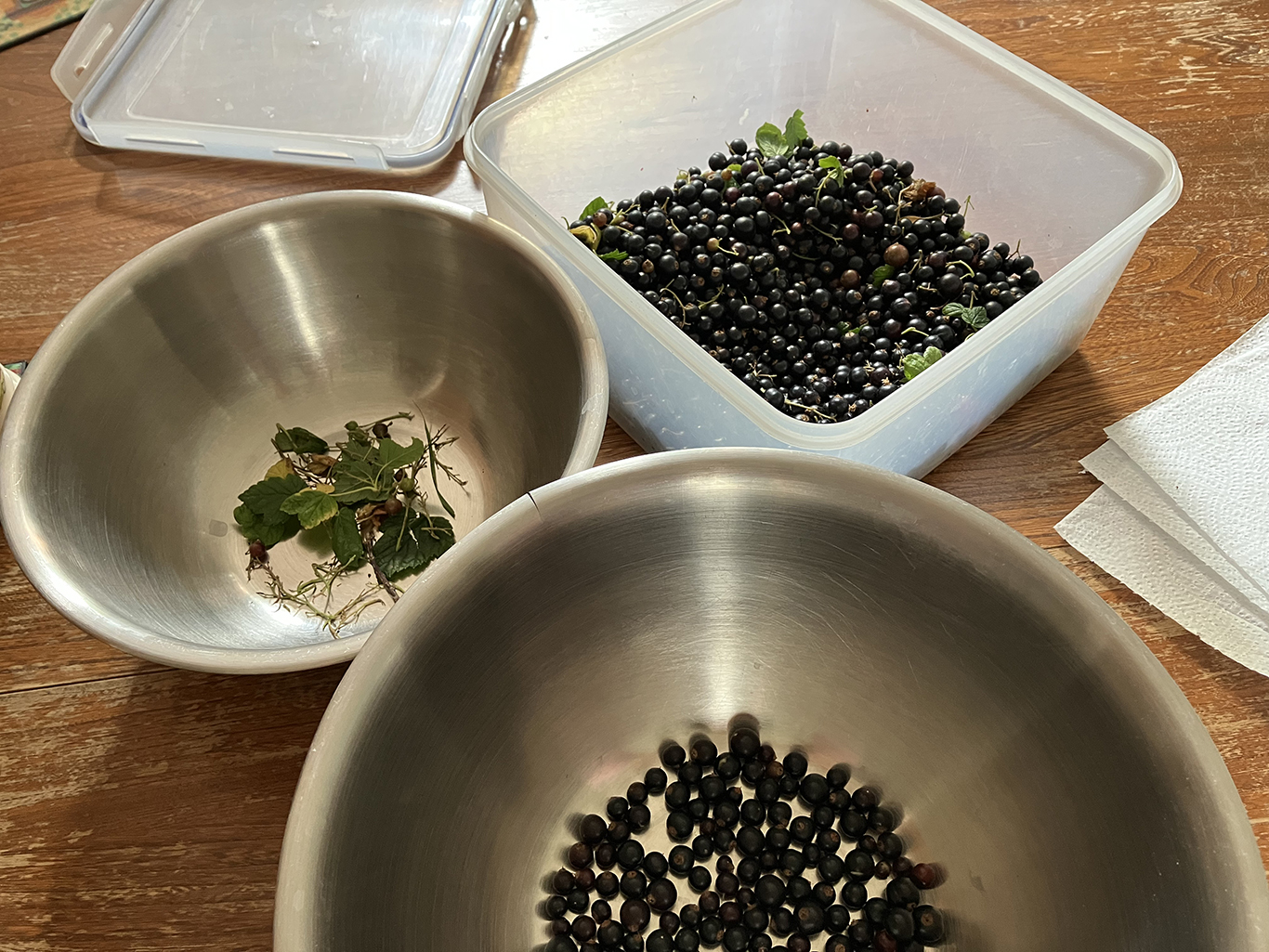
The abundance does mean time has to be set aside for processing. First up were the blackcurrants, which crop in two goes on our plot. This first harvest were de-stemmed and frozen loose, whilst I turned the second lot into blackcurrant coulis for ice creams and fools.
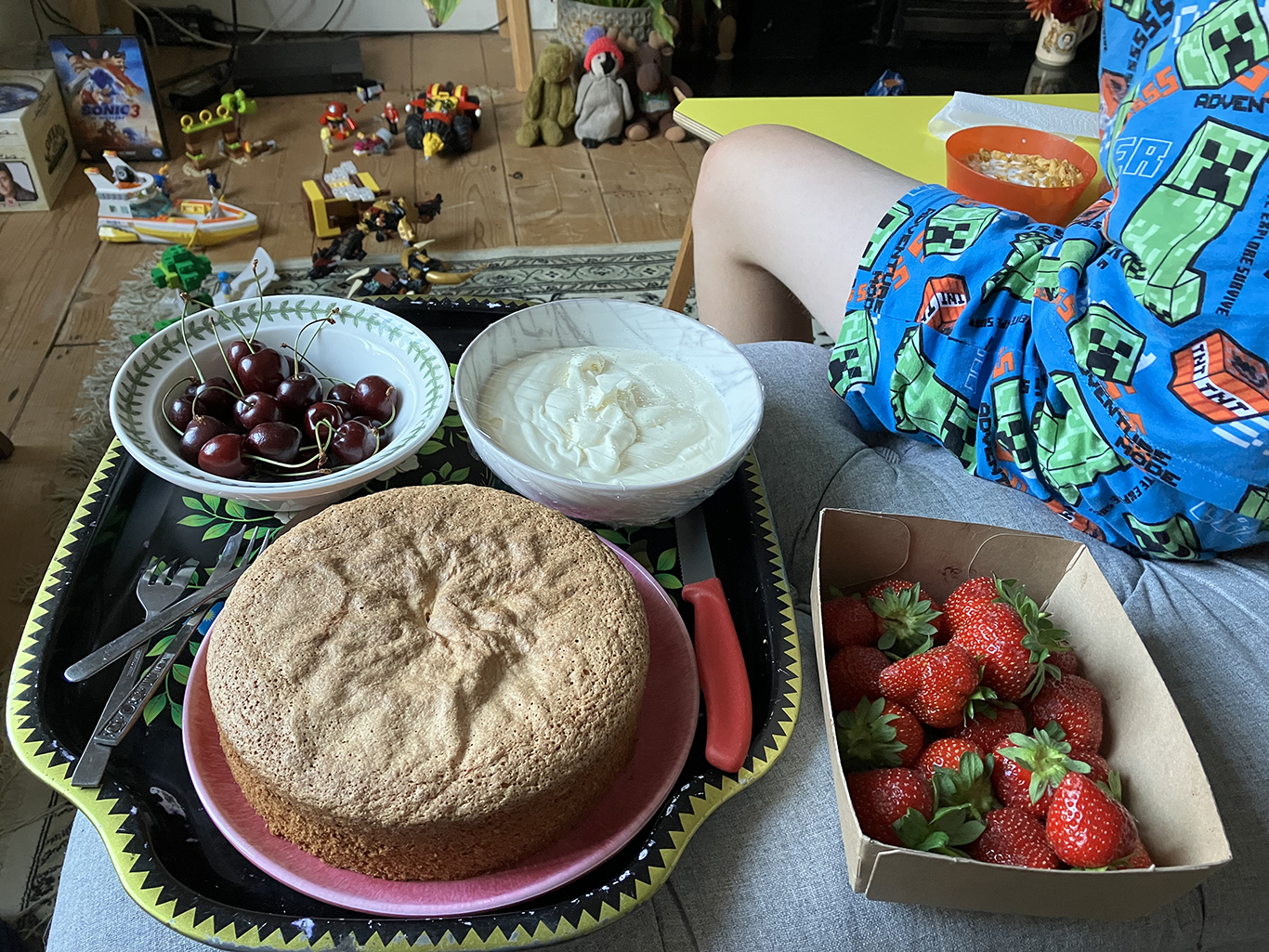
When we’re at peak berry season it’s useful to have good plain cake up your sleeve, one that requires little adornment other than a dollop of freshly whipped cream and fruit of your choice. This almond number is one such cake. I’ve been making it for over 20 years, which seems inconceivable, but I know it to be true because I jotted it down in my recipe book along with the date of publication. This is a whipped sponge that relies on ground almonds for substance and flavour, with a whisper of the exotic from orange and cinnamon. It could conceivably be one of those wonderful Italian breakfast cakes, though it probably has its roots in the eastern Mediterranean. It’s best made with 100% almonds, but if I’ve not got enough I do sometimes add a little flour to bulk things out.
The best almond cake (from The Times, February 22 2004, by Lucas Hollweg)
3 eggs
160g ground almonds (I sometimes sub in plain or spelt flour if I don’t have enough almonds – this makes for a slightly drier cake, but that’s better than no cake at all)
150g caster sugar
zest and juice of half an orange or lemon
pinch cinnamon
- Set the oven to 180c. Grease and line a 17.5cm round cake tin.
- Separate the eggs, putting yolks into one bowl and whites into the other.
- Using an electric whisk, whip the egg whites until stiff. Add one tablespoon of sugar from the weighed amount and whisk until thoroughly incorporated – this helps to stabilise the egg whites for a few minutes.
- Beat the egg yolks with the remaining caster sugar until it is thick and pale. Fold in the almonds, lemon zest, lemon juice and cinnamon.
- Carefully fold the egg whites into the egg yolk mixture. Pile into the cake tin, level the top, and bake – check after 25 minutes, putting back in for another 5 minutes or until done. A skewer inserted into the centre will come out clean.
- Cool in the tin. Serve with berries and whipped cream.
Also this month:
Harvesting: French climbing and dwarf beans, broad beans, chard, perpetual spinach, cavolo nero, red onion, tender stem broccoli, courgettes, Charlotte potatoes, blackcurrants, blueberries, gooseberries, ammi majus, cornflowers, opium poppies, first dahlias, strawflowers, teasel, scabious, last sweet william.
Cooking and eating: It’s all pretty simple really, my cooking mojo has disappeared of late. Broad beans with new potatoes and mint; puff pastry tart with tomatoes, red onion, anchovies and olives; never-ending flapjacks and muffins and sandwiches.
Also in the garden/on the plot: I allowed the self-sown poppies to grow so densely that they’ve obliterated the ammi visnaga, which was a mistake on my part. Started off autumn salad leaves in modules. Added new perennials to the garden (salvia, achillea, rudbeckia). Cut back spring flowering shrubs.
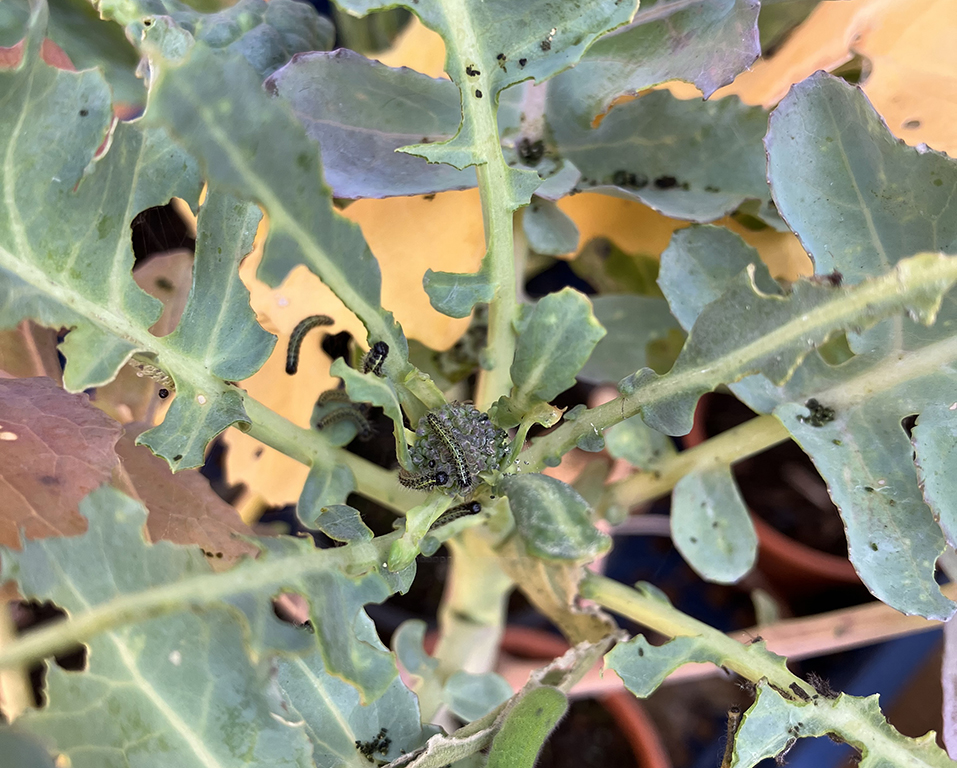
And to note: We’ve had a difficult six weeks on a personal level, but the solace to be found from being outside, harvesting, watering, watching the caterpillars, bees and butterflies, can not be underestimated.