
During my RHS course, which has finished for now, we spent a lot of time hearing about horticulture is good for one’s mental and physical health. And everytime I heard this, I thought “well that may be true for some people, some of the time, but what about July on the allotment?” Because it’s now that the time, labour, sweat, blood and cash is meant to come together to one glorious harvest – and the heartache when it doesn’t is palpable.
Every year at this time, I bring to mind an anecdote about Vita Sackville West’s column in The Observer, in correspondence with a reader who opined that she was “an armchair, library fireside gardener”, to which she replied “May I assure him that for the last forty years of my life I have broken my back, my finger-nails and sometimes my heart in the practical pursuit of my favourite occupation?”.
Heartbreak is something not often discussed with allotments, but it’s there and it is real. A heartbreak fuelled by hopes and dreams born of a thousand seed catalogues, Instagram reels, glossy magazines and TV programmes. Our expectations are set high and so when reality doesn’t match up, disappointment lurks. I should remember the teachings of the Buddhists and the Stoics: desire is the root of all suffering.
To explain, let’s head back a few weeks.
Remember the seedlings, started off as usual in early April in plugs and pots, in virtuous peat-free compost (a coir and woodchip mix), in the sun room? Well they germinated OK but then just sat there, with baby seed leaves, not really doing anything. By the start of June I thought enough is enough and so out they came to be potted up and get some proper weather…well proper weather they got, with what we now now to be the hottest June on record. What they also got was a devouring from the world’s biggest population of slugs and snails. (What is it about Bearwood and our crazy slug/snail population?!. Every evening I’d head out to pick off the gastropods and there would easily be 20-30 in one tiny area).
Reader, my baby cut-flower and veg plants did not stand a chance.

I did my best to help the babies, moving them away from the main slug area, getting them out of the coir and into a different compost mix, and whilst some did perk up (scabious and redbor kale), others stayed weak and without much hope (cornflower, cosmos and cavolo nero). Others failed completely: there won’t be any phlox, cleome or strawflower this year. At least three trays worth of seedlings have completely vanished, done for by the slugs/snails and the weather.
Finally, this last fortnight, I have planted out what was salvageable – a good 4 to 6 weeks after I might normally expect to. A few lessons here:
- I left the seedlings in the coir for way too long, and they weren’t getting the nutrition they needed. If using coir, four weeks nutrition maximum is all it can offer. Peat-free is absolutely the way forward, but it isn’t easy.
- Really I attempt to grow way too much from seed without a greenhouse. I do this partly for pride and partly for interest, but it actually is a waste of money if all the plants are getting eaten by snails or whither from exposure. Better to buy a few plugs and attempt to pot them on.
- I haven’t used any slug pellets this year because of what they do to the ecosystem. That’s all well and good, but to have no slug protection on young plants is untenable; they simply can’t stand the nightly assaults. Next year I’ll need to try either raising plants up onto trestles, using wool pellets or gravel or something.
- June and July on the allotment is always stressful. Always has been, probably always will be.
So that’s the Tale of the Stunted Seedlings. There are other tales to tell to, of the brambles, grass, buttercup and fat hen that are endemic. I am tolerant of quite a lot of weeds now, as I understand them to be important habitat for insects, but there is a balancing act to be found and currently the weeds have the upper hand. Then there’s the Tale of the Soil That Could be Sand, so free-draining and so dry that many hungry veg will always struggle (peas, I’m looking at you). A few lorryloads of manure a year would sort it out, but of course that is far easier said than done. Let’s not even talk about the black bean aphid that got to the broad beans before I did.
At this time of year I simply do not have the hours in my day to keep on top of it all, what with work, family, RHS exams, house and garden to keep up as well.
Having said all that, it’s not all doom and gloom. The cornflowers that I put in in March have been magnificent, and the calendula and sweet William did OK too.
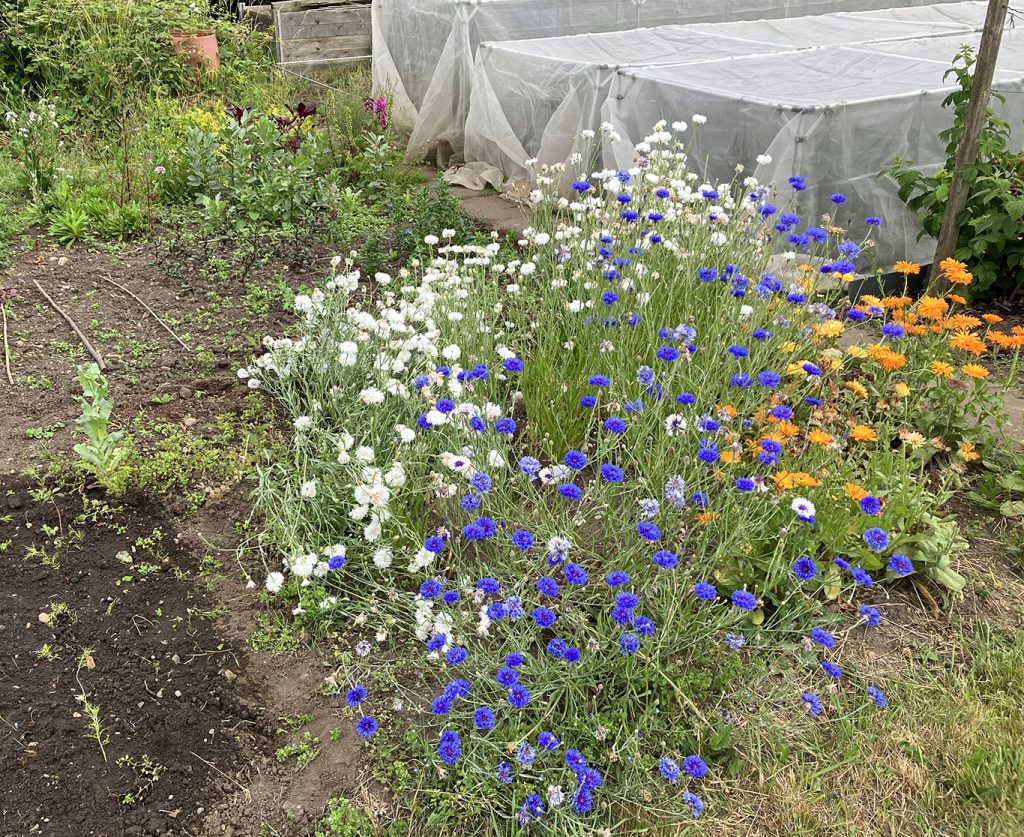

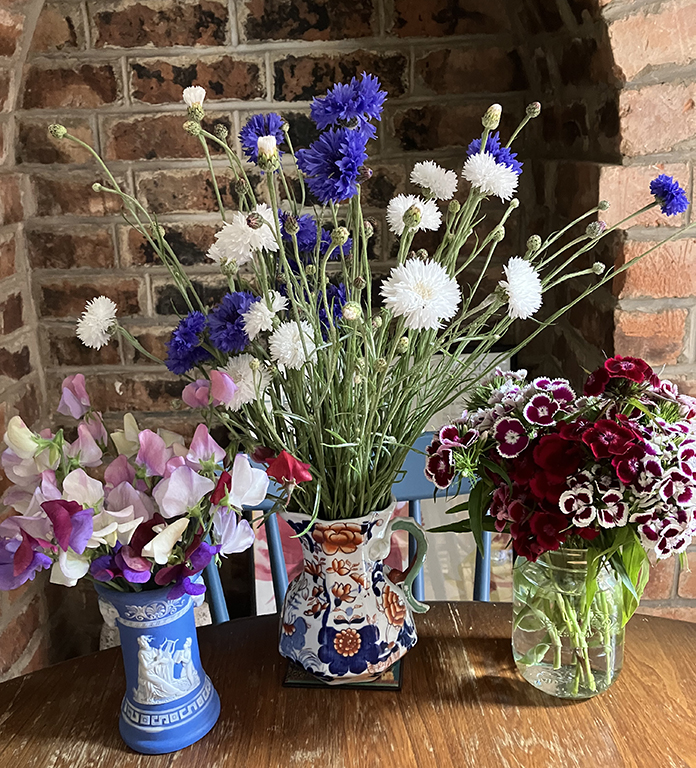
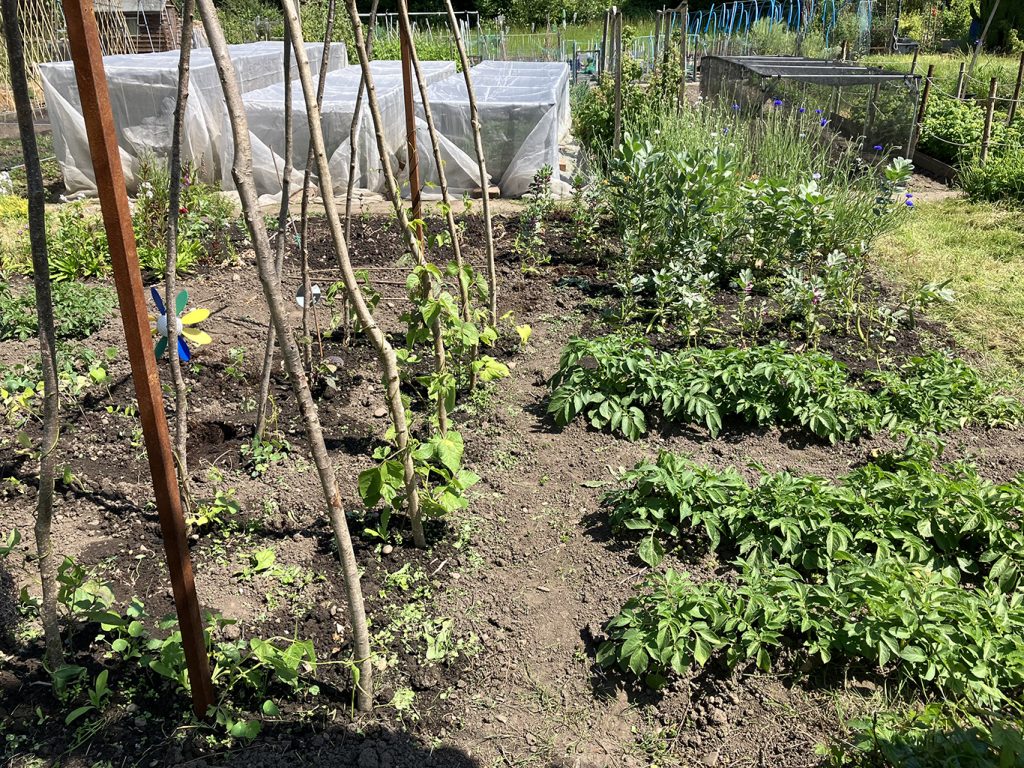
The climbing beans are actually growing for once (pigeon protection worked!) and I’ve had a little poke around the potatoes and am hopeful of a decent harvest in a fortnight or so.


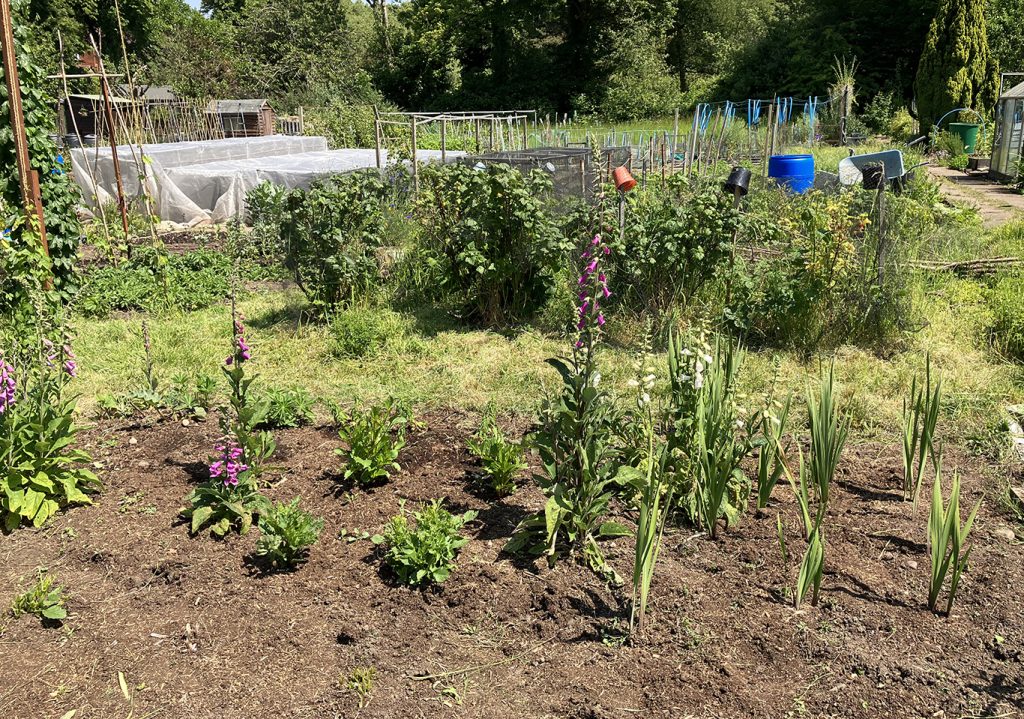
It’s the shrubs and perennials that earn their keep on the allotment. Dahlias and gladioli just get on with it; after removing some plastic sheeting that I’d put down for weed control that was inadvertently a perfect slug habitat, they are now thriving. The red and blackcurrants have not been productive this year, but they are probably 20+ years old now so I’ll let them off. Blueberries and raspberries are looking promising.

As ever, it’s the nasturtium that are threatening to take over. I planted these once, about eight years ago, and now they seed themselves and have to be ripped out before they engulf what’s left of the cut flowers.

My notebook from last year reminds me that the bulk of our harvest comes later in the year, and that’s just how it is. A reminder of the Stoical approach.
Also this month:
Harvesting: First chard, first stick beans, first potatoes, broad beans (though black bean aphid got most of them before I did), a few strawberries, redcurrants (v poor harvest), red russian kale (veg trug). Last sweet William, last foxgloves, lots of sweetpeas, quaking grass, cornflower, calendula, roses (garden).
Sowing and planting: Trying again with fresh sowing of cavolo nero and chard for autumn/winter. Planted out the final lot of spring-sown cut flower and veg seedlings: scabious, cosmos, bunny tail grass, kohl rabi, cavolo nero, redbor kale, squash and courgette. Many seedlings went straight into the green bin. Moved a few slug-ravaged dahlias inside to see if they recover.
Also in the garden: The roses and summer drummer alliums are out and brilliant. My thoughts turn to late summer and what has perennality in our conditions whilst being slug proof. Sanguisorba, fennel, that kind of thing. We cut back the spring flowering shrubs but due to ongoing bin strikes have no way of getting rid of the massive pile of cuttings, so they sit at the back of the lawn, a new habitat for invertebrates.
Cooking and eating: It’s fruit season. Strawberries, blueberries, nectarines, apricots, plums, raspberries, all eaten fresh but I’m growing bored and want crumbles, cakes, patisserie. Creamy broad beans. Moussaka. Meringues. Oatmeal raisin cookies. Thomasina Miers’ vanilla milk ice.
Also: RHS exam ate up time and energy. Massive IT meltdown caused weeks of disruption and a very expensive new laptop. Visit to Highgrove for my birthday, and David Austin roses with Emma. So much to think about and manage for school holidays/clubs and work. Reading Seed to Dust by Marc Hamer, wonderful, and Mountains by Steve Backshall. Not had any telly in weeks.