
The autumn clear-out has started earlier than normal this year. I’ve learn from years of wrestling mulches and black plastic with painful, numbed fingers that it’s best to get the bulk of the work done before the frosts come, even if that means ripping out the last of the cosmos, snapdragons and nasturtium before their natural end. It’s also, I admit, a sigh of relief; Calling another year done lets the mistakes of the year slip away, and I can get the planning for next year’s glorious successes (perhaps)!
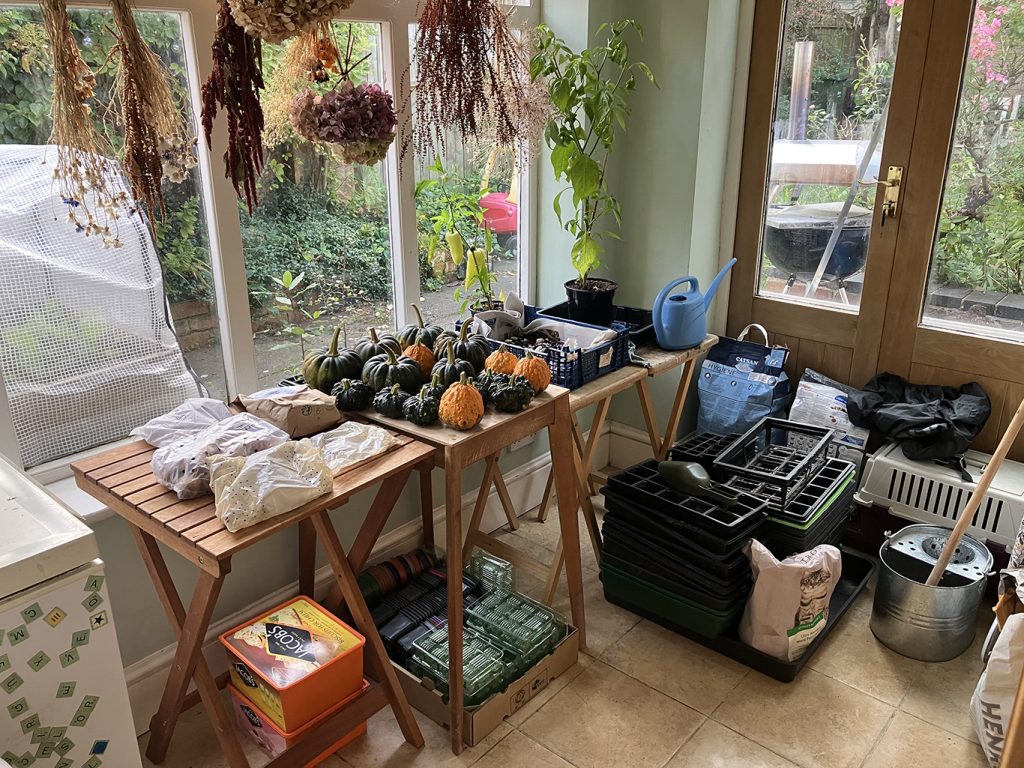
First job is seed saving. There’s a tray of runner and French bean seeds drying out in the sun room, some destined for the cooking pot, but others I’ll plant in March in hopes of another harvest as good as this year’s. I’ve also saved seeds from the tall, florists snapdragons, which is good because the bought-stuff is super pricey (about £6 for a tiny packet). Alas the sweet peas fell to some kind of fungal infection before I could get their little black balls, but I’ll make a note to set aside some squash seeds after halloween is done with. We had a good harvest of squash this year, green and orange and knobbly, and now adorning mantlepieces as we head to the start of winter.

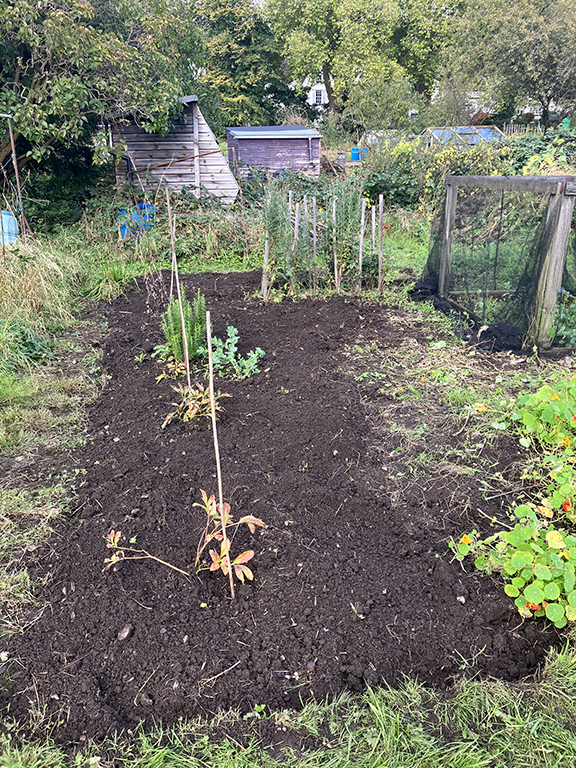
Clearing started with the perennial issue of creeping buttercup and grass, which had carpeted the length of the shed-side bed. This area also has a few perennials and shrubs in there (rosemary, peony, fennel) as well as spring bulbs, so I can’t simply cover it over and wait for the offending plants to die back; proper remedial work is required. Over two lengthy lunchtimes I forked out trug after trug of white fleshy creeping roots. I last did this two years ago, and try not to dwell that it’s a task that needs repeating again and again and again. As far as the main beds go this is the end of the autumn clearing, as I prefer to mulch with black plastic and allow any remaining foliage from the annuals to die back into the soil over the winter, which adds to the organic layer. Come spring I’ll fork all the beds over ready for planting.
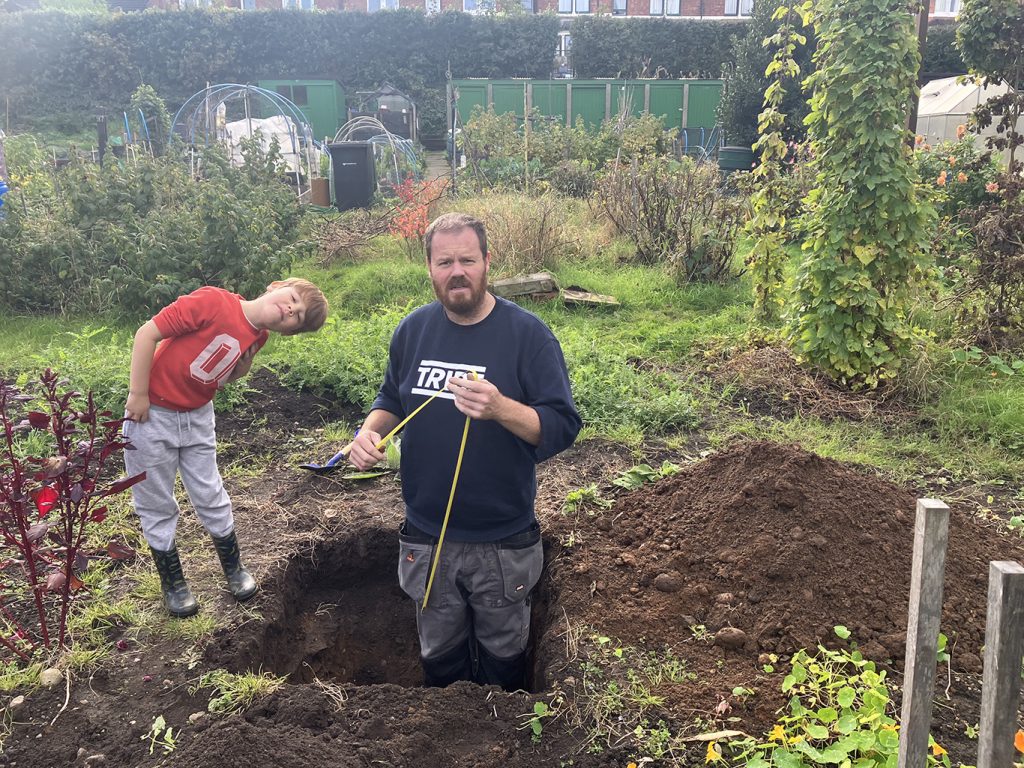
Homework this week from gardening school (I am studying for the RHS Level 2 Certificate in Horticulture at Winterborne House) is, essentially, to dig a massive hole and take a look at the soil. The proper name for this is site-based assessment via a profile pit. Obviously I can not possibly be bothered to dig a one metre deep pit by myself, so I enlisted manual labour from the boys.
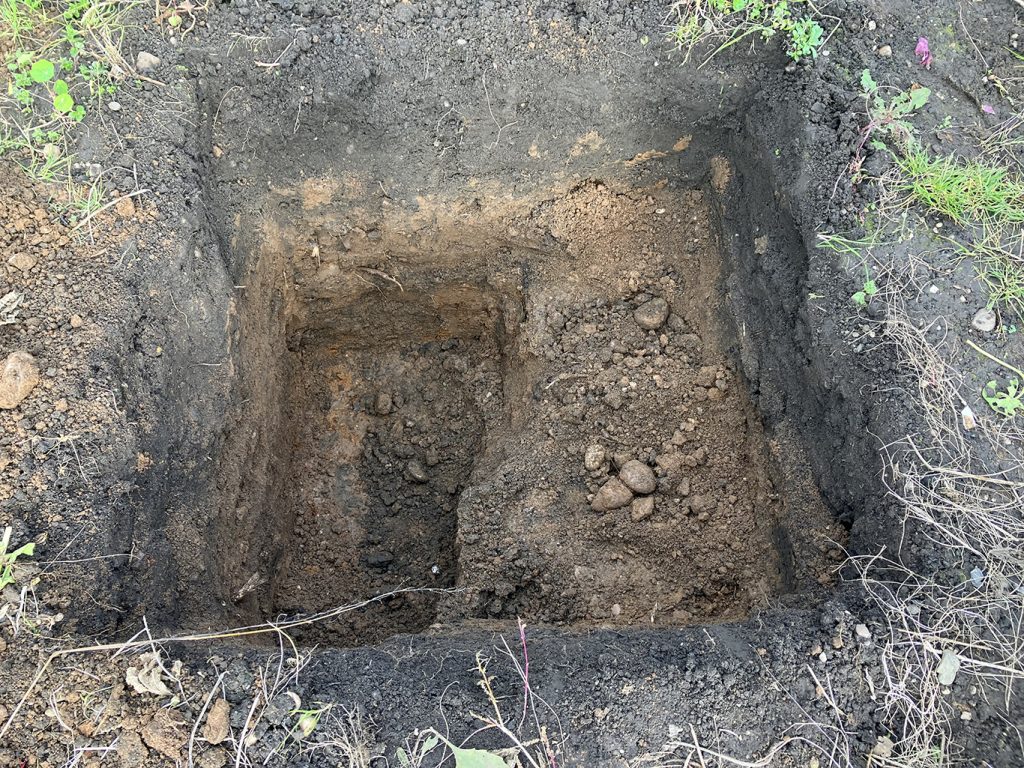
Here is our site analysis for the allotment site. The first 25cm or so of topsoil is light, crumbly and loamy, full of worms, a few stones but not many, and just a few roots from the hops and weedy grass. In short, lovely stuff.
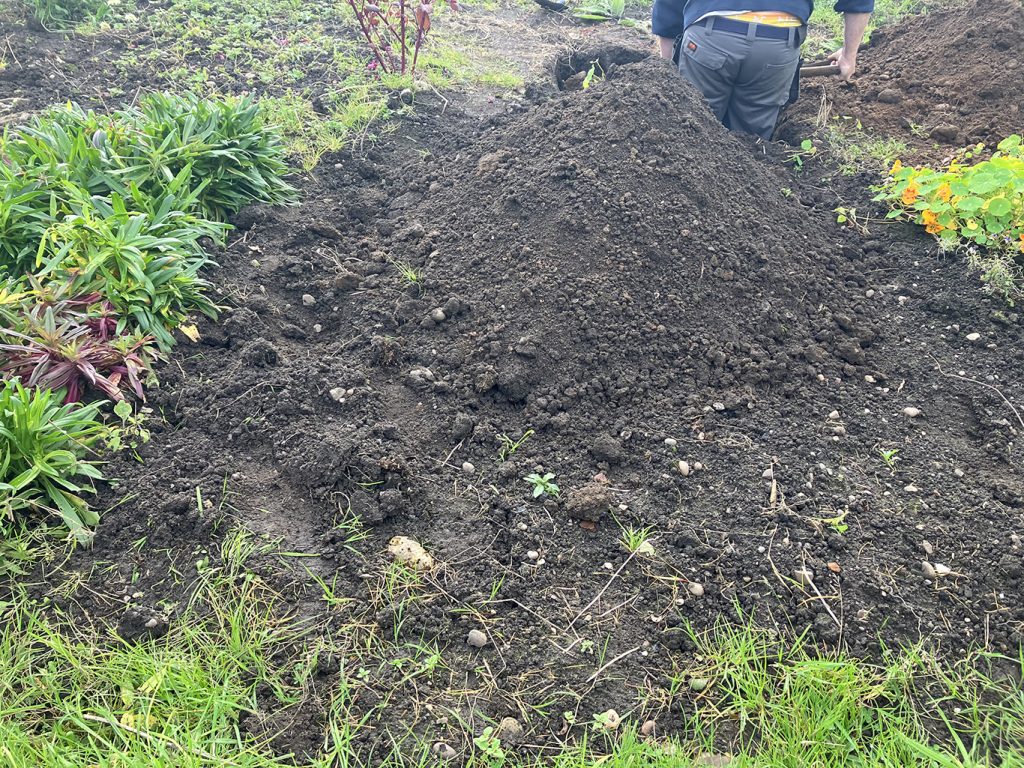
At 25cm down we hit the sub soil, which has several layers to it. At first we meet a layer of reddish-brown earth, clearly with a higher percentage of sand, with larger round pebbles. The texture is dry, fine and crumbly, even after the recent weeks of wet weather. I’d call this sandy loam. No worms here. This layer is about 45-50 cm deep.
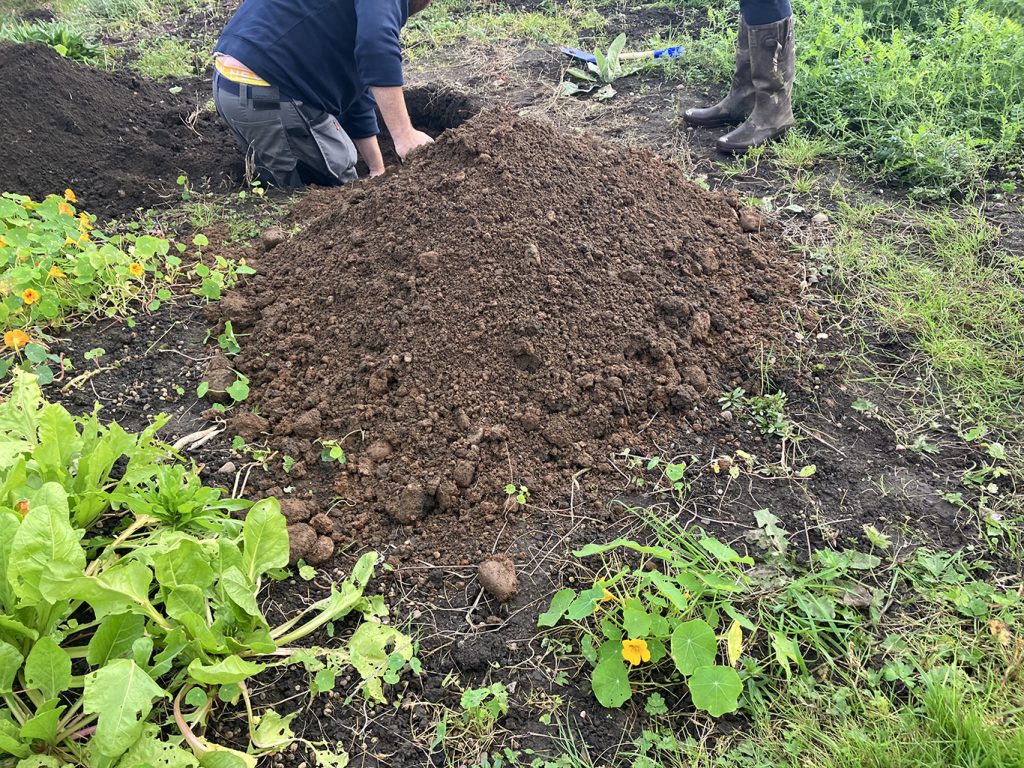
At 65cm down it gets very wet indeed – imagine digging into a Cornish beach and you’re about there. There’s still some earth but the sand content is high, and it’s so wet that it holds the shape of the spade. There’s gravel here too. This goes on until about 90cm down, where there’s a very hard compacted layer of earth – this is the reason for the wet of course, because the water is getting stuck at this level. Break through that, about 95cm-1m deep, and suddenly it’s very very dry, almost pure sand and gravel, and orange in colour.

Chatting to allotment-neighbour Martin, it turns out that on Ordnance Survey maps from about 100 years ago, the area next to the high school at the edge of the allotment site is marked as a gravel pit. We’re cultivating land that is essentially a river bed – right next to the Chad brook – so very free draining and sandy.
What can I learn from this? The topsoil is lovely stuff, augmented with years of manure and compost through years of cultivation. Underneath will be (I suspect) much lower in nutrients, because of the high percentage of sand, which is inert and doesn’t hold nutrients or minerals well. It’s free-draining down to about 95cm. In a dry year, plants that need moisture will suffer, particularly because my time for watering is limited in the summer months. On the other hand, those Mediterranean plants adapted for free draining soil should do well – no wonder the lavender and rosemary love it here so much.
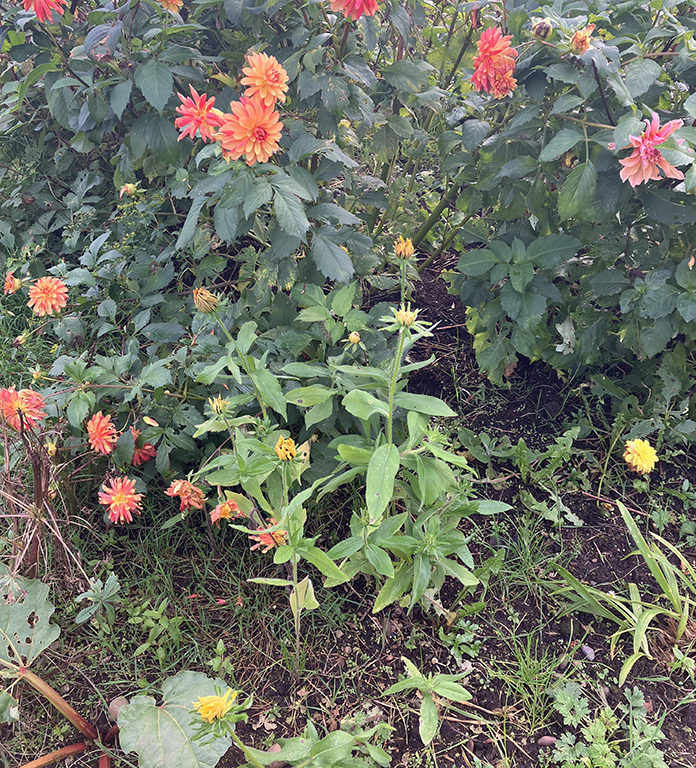
So with that fun job done, and the main plots covered, I look around to see what else needs attention. Next up for attention is the dahlia bed, which has become carpeted with the encroaching grass and buttercup, but also (happily) has become home to some self-sown rudbeckia. Clearing that bed will be another job to do before the ice falls.
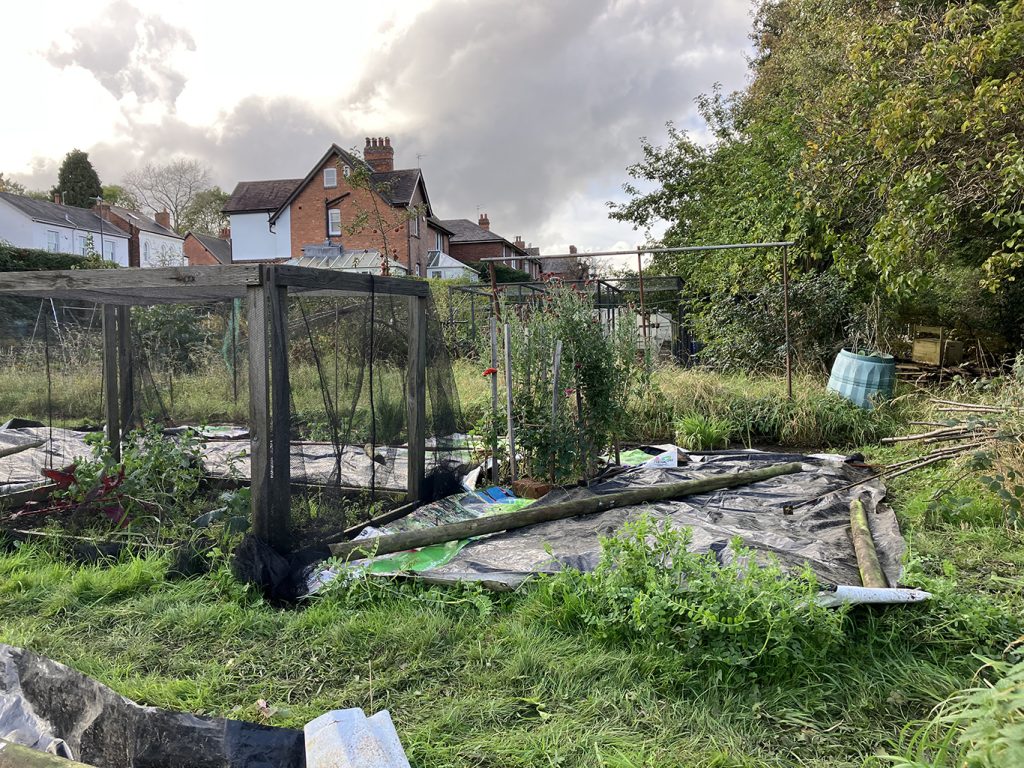
Finally, a mention that underneath the paving slabs that I keep for weighing down the plastic sheets, I find clutches of tiny white eggs (slugs?), woodlice the size of a grain of sand, and a small ball of dried golden grass, with a little tunnel hollowed out. Surely the home of a mouse? I put the slab back and left them all in peace, obviously. A reminder that I share this plot with about a billion other creatures. AND that reminds me that when I cleared a plot yesterday at gardening school, I uncovered the home of five newts, each grey-brown body huddled into the next for warmth. For a second, the world stopped as I felt wonder and glory, in creatures the size of my little finger.
Also this month:
Harvesting: Last squash and gourds, rosemary, last raspberries (they are actually still going but I can take no more), last dahlias, still waiting on the chrysanthemums though.
Jobs: Clearing, covering, weeding – generally preparing for next year
Cooking and eating: All hail cauliflower cheese. Butternut squash and sweet potato soup. Cranberry and marmalade cake. Blackberry and apple crumble. Successfully knocked £100 off my monthly food bill by eating up the freezer and batch-cooking with veg and beans.
Also: Pumpkin carving. Cheltenham Literature Festival. Reading The Wild Silence by Raynor Winn, This is not a diet book by Bee Wilson, Girl Woman Other by Bernadine Evaristo, The Hollow by Agatha Christie, and loved Sort your life out with Stacey Solomon.