
Hello everyone, it’s been a while, which I blame on work, exams, family life, domesticity, rain/cloud/cold and so on. Since my last post at the end of April many things have moved on – but other things, not so much. Firstly, I can’t not talk about the terrible weather. That last post led with the fact that it was the end of April but still freezing – oh the innocence! – for it’s now mid-July and whilst there has been the odd hot day here and there, generally speaking, this summer has been one of gloomy, cloudy days, a heck of a lot of rain and below average temperatures. Good for the roses and the potatoes, fantastic for the slugs (more on that later), but bad for anything that needs a bit of mid-summer heat.
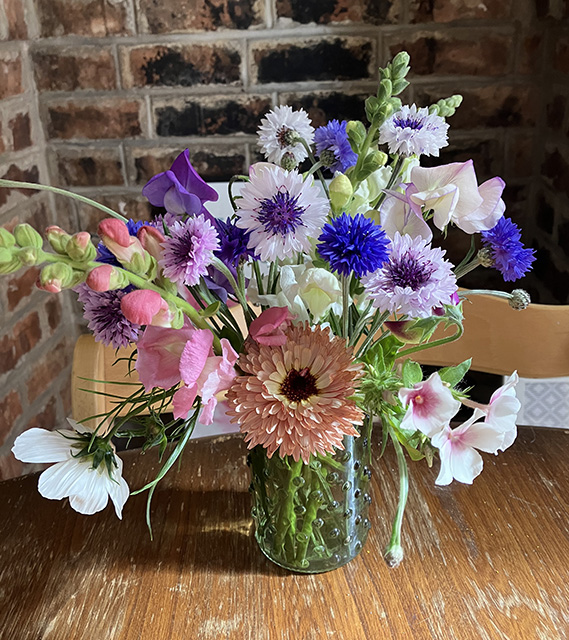
As usual the triumphs are met with disasters. Some of this is to do with mindset (why oh why is my harvest not early and brilliant and bountiful?!) and I have to remind myself that it’s colder in Birmingham than where I used to live in Worcestershire, and we’re close to water, on thin soil, so plants just behave differently.
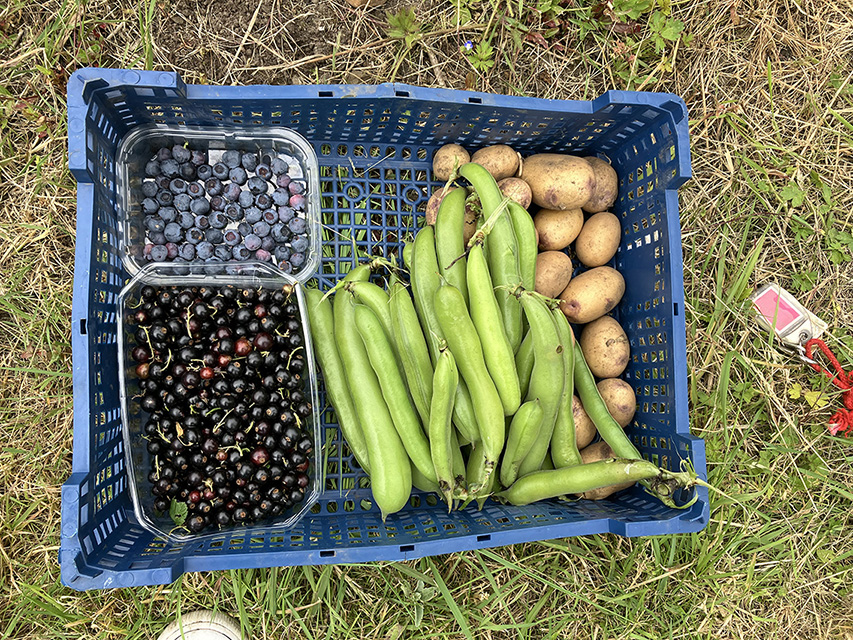
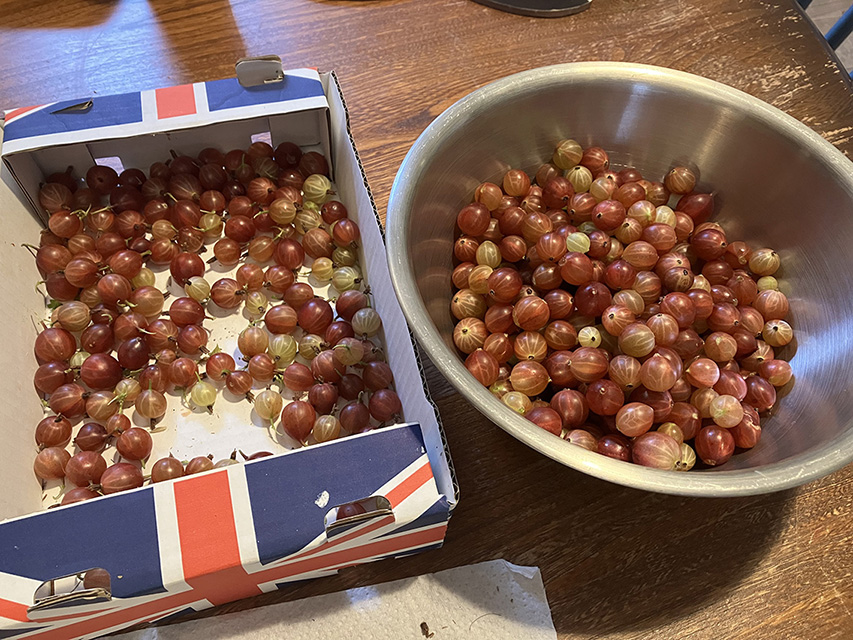
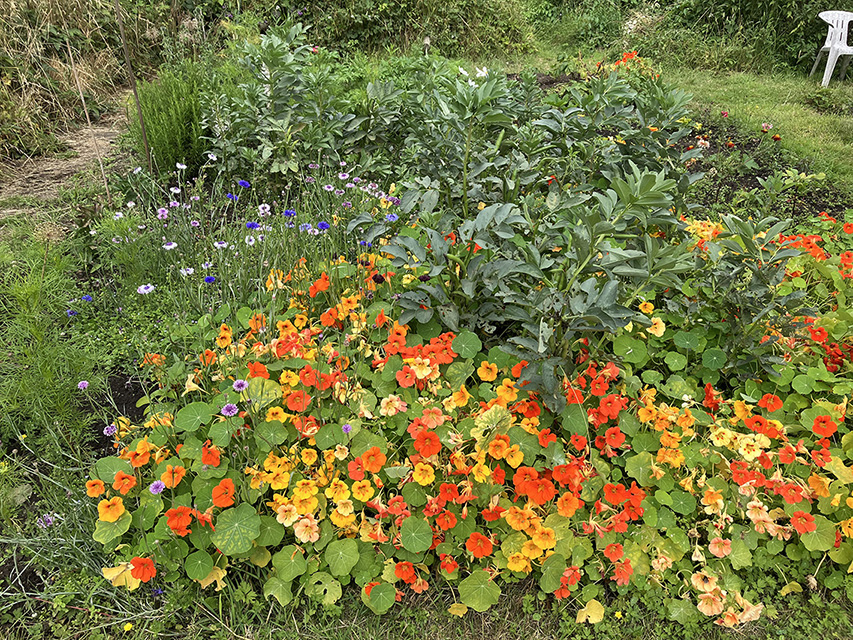
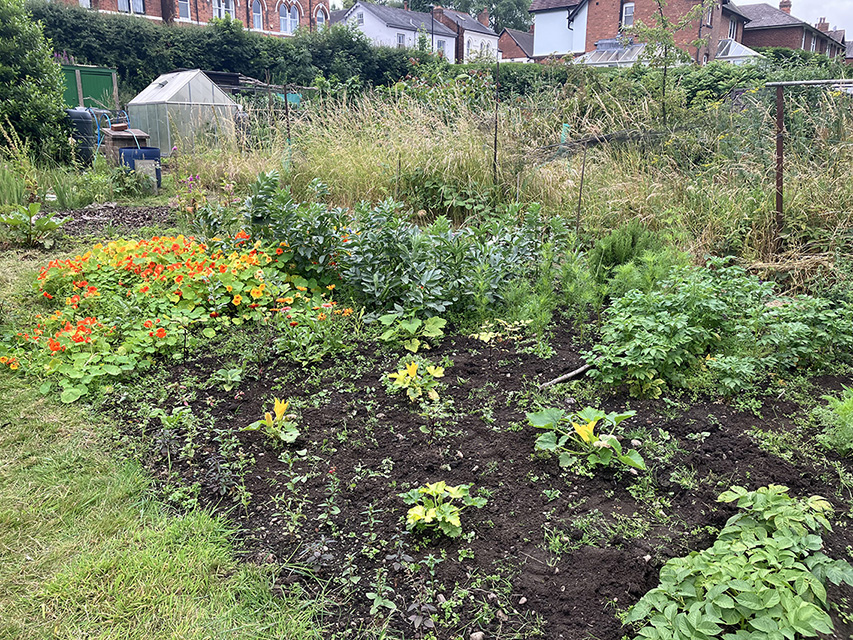
The broad beans were slow to get going but we’ve now got an excellent harvest; they also look lovely sitting in a thicket of self-sown nasturtium that’s also handy for attractive pollinators. Same story for the cornflowers, which took a battering in the spring chill but are now coming into their own. The berries have been OK so far, though the blackcurrant harvest is still down on previous years and I wonder if our plants are nearing the end of their life. Gooseberries are holding up well; after topping and tailing this lot I simmered them into compote, ready for future crumbles and pies. And there’s potatoes, so many potatoes. The sunflowers are looking very promising indeed. So far so good.
There was a lot of preparatory work that I haven’t told you about. I didn’t manure this year but gave green manure (a mustard) a go, with mixed results; it’s fine for the low-maintenance plants but I think that our soil is so free draining that it lacks the key nutrients for the hungrier crops.
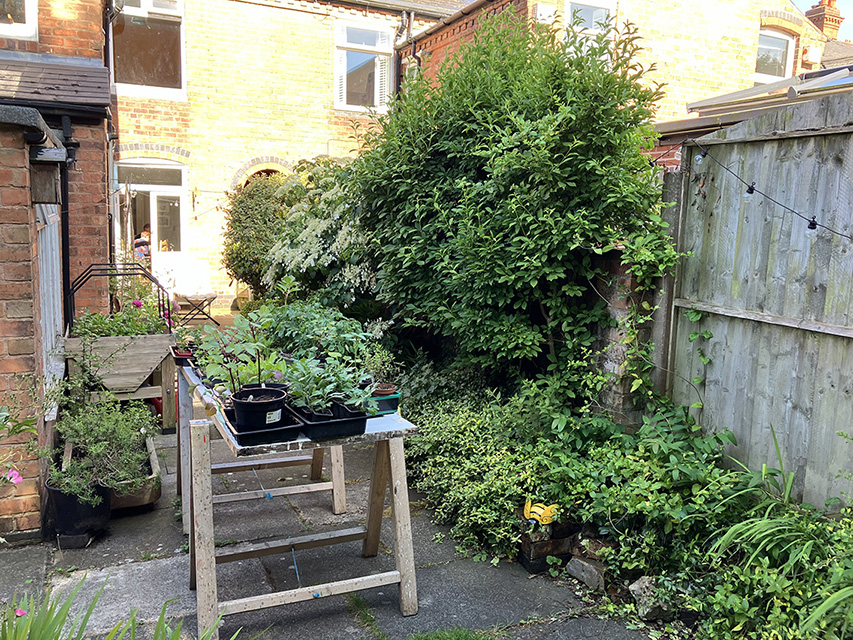
After the saga of last year’s decimated seedlings, this year I made a Heath Robinson-style slug defence system for hardening off, comprising of two trestles pinched from my husband, plus the old bathroom door that had been earmarked for the skip. It worked surprisingly well and had the double bonus of lifting everything up to access more light. The upshot was that propagation went pretty well this year, especially so given that I don’t have a greenhouse. The plants that went in the ground in May were good plants – not the best, but certainly not terrible.
It’s here, inevitably, that the problems began.
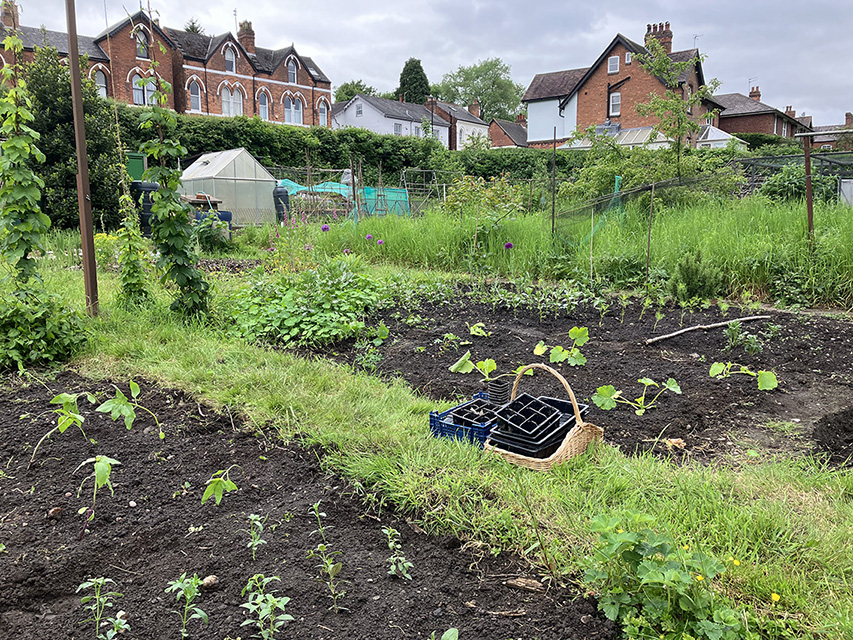
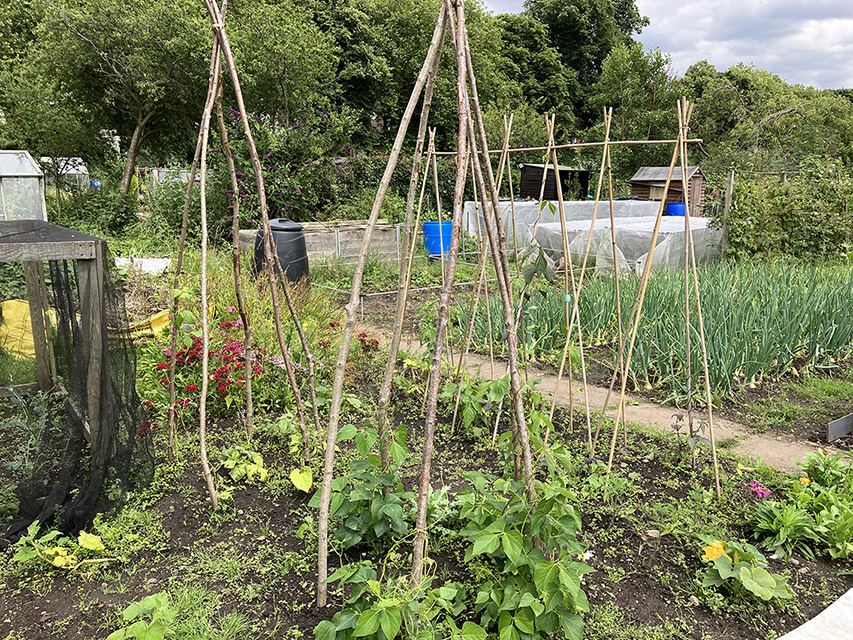
Problem one has been the cold and the dark. The summer-cropping sun-lovers, namely courgettes, squash, borlotti, French and runner beans have all suffered with the gloomy weather. The courgettes are pretty much the same size now as when they were planted out eight weeks ago, although we do now have flowers so I live in hope. The beans started off OK but then the cold weakened them, and weak plants equal slug damage. Many of the growing tips were lost and whilst some are still trying, I’ve lost about half I think. There’s still time for the others to perk up, we’ll see.
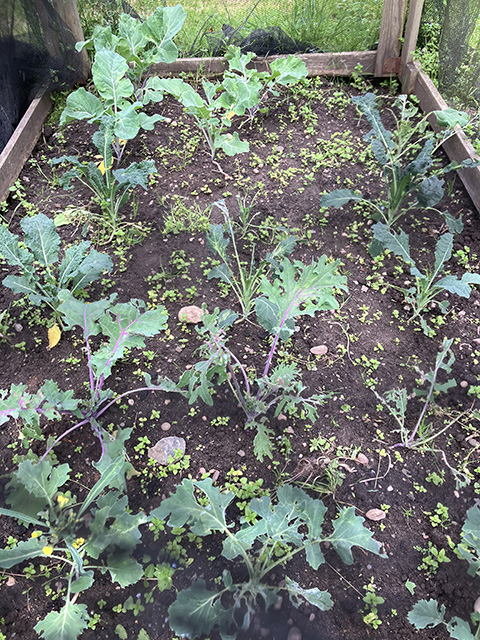
Problem two – and the bigger problem – is the enormous population of slugs and snails on the loose this year. As you know I’ve stopped using pellets due to the problems they create for the wider ecosystem, but after the warm, wet winter, this year is a losing battle against the munchers. Pretty much everything has been nibbled (read: destroyed), with the only notable exception being snapdragons, which I presume they don’t like. The kales were holding up well until this week, when the two-day downpour led to a 48 hour gastropod party.
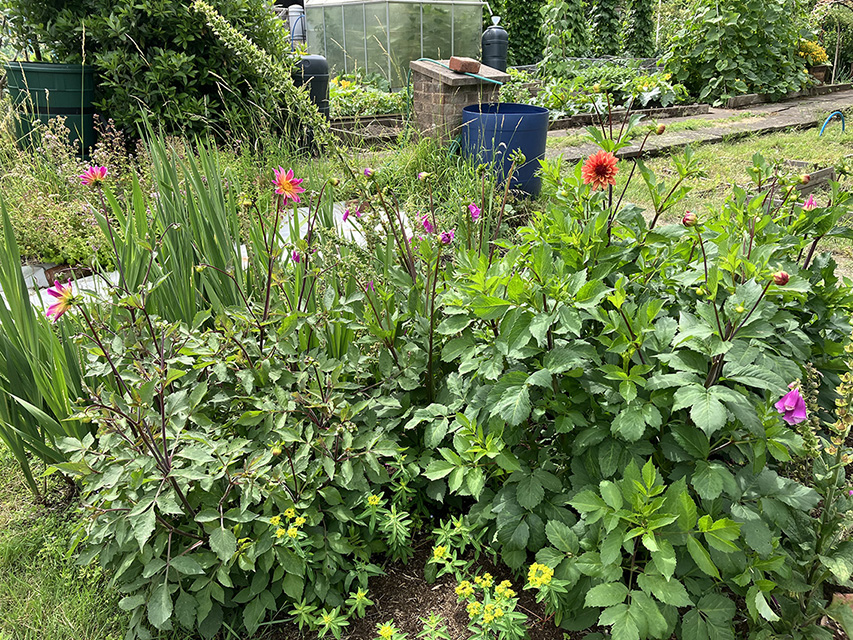
The biggest victim I have left until last. My beloved dahlia bed, which last year was so magnificent, has been decimated – not a single plant has made it through the slug apocalypse My kindly neighbour Martin had some leftover plants which he gifted to me. They were good, strong plants, that I thought would be OK – but even they have been stripped.
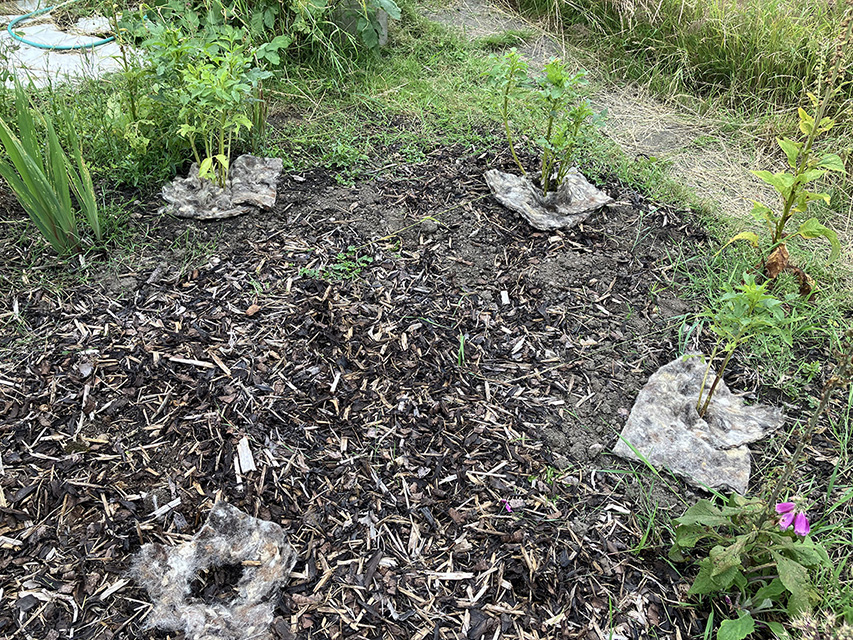
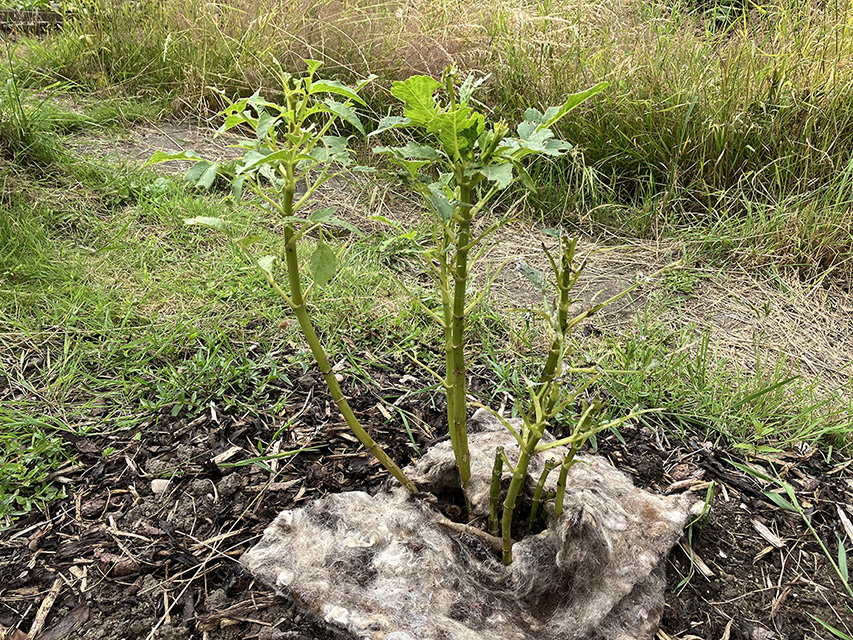
So what to do? I tried wood chip, thinking that the rough texture would be unpleasant to the enemy, but the opposite was true and it just made the problem worse. Wool pads have not worked. I’ve picked the slugs off but they just come back. I still don’t want to introduce murderous chemicals into the ecosystem, and it seems counter-intuitive to buy expensive gravel, copper, wool pellets etc simply to protect some cavolo nero which is really not expensive to buy. The obvious answer is to stop growing things that the slugs love, which is a practice that I’ve started at home but am reluctant to follow for the plot. What is an allotment with no kale, no courgettes, no beans?!
I do ponder if it’s time to call it a day on the plot. I have so little time now, due to the realities of balancing work with school runs and everything else, and once a bit of grass or brambles or some other pest takes hold, it’s that much harder to eradicate it (the brambles we attacked in the winter have, inevitably, come back with a vengeance). Small jobs then become bigger ones, which take up more of the time that I do not have. I say this not to sound defeatist, simply realistic. The way that we grow is hard work, given that we’re a ten minute drive from our house, can’t use a hose-pipe, biosecurity is difficult, and all the rest.
BUT I still need to grow things, cook things, eat things. I like to have flowers for the house and I find pottering around podding beans and topping/tailing fruit grounding. It’s so good to have something to do that’s outside of the house.
I don’t know what the answer is yet. Keep you posted.
Also this month:
Harvesting: Chard, spinach, rocket (from veg trug). Blueberries, gooseberries, blackcurrants, new potatoes, broad beans, cosmos, sweetpeas, cornflowers, first snapdragons. Sweet William, sweet rocket and alliums all finished now but were lovely.
Cooking and eating: Ordered a box of Lake District hogget – what a treat! Proper choc chip cookies, semi-freddo, doing a lot with courgettes and tomatoes (none of them home grown sadly). Pasta with pesto and broad beans. Processing berries/currants for the freezer.
Also: RHS exams, a few garden visits, working hard, school holidays start next week.