
With the clocks’ change, we have entered into the dark time. I read that samhain, the Gaelic festival that coincides with Halloween, marks the end of the harvest, the start of winter and, more specifically, the darker half of the year. And this year it truly feels that way, with days of seemingly never-ending concrete coloured skies and fog. On bonfire night, firework smoke hung in the hour for hours, trapped in the atmosphere by the thick blanket of low-lying cloud. So there’s no denying the change of season, and the last few weeks have seen a shift from sowing, growing and harvesting to clearing, tidying and preparing for winter.
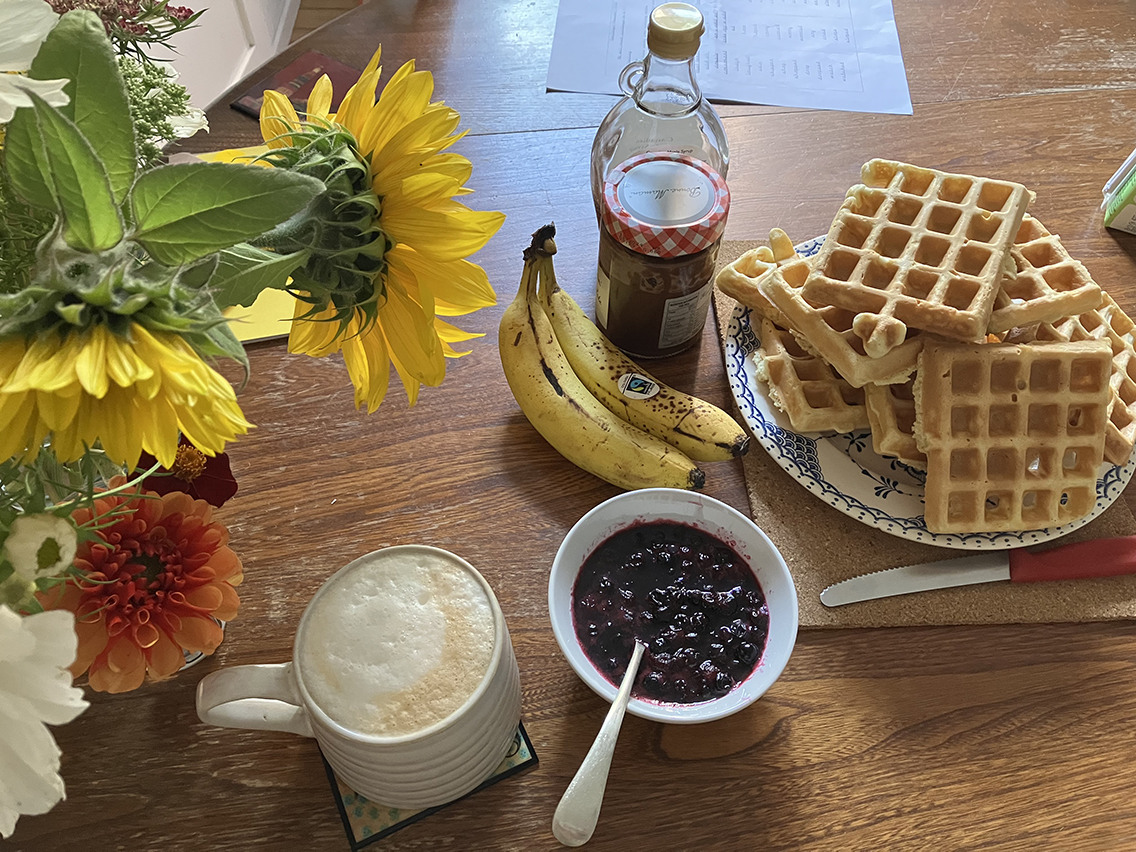
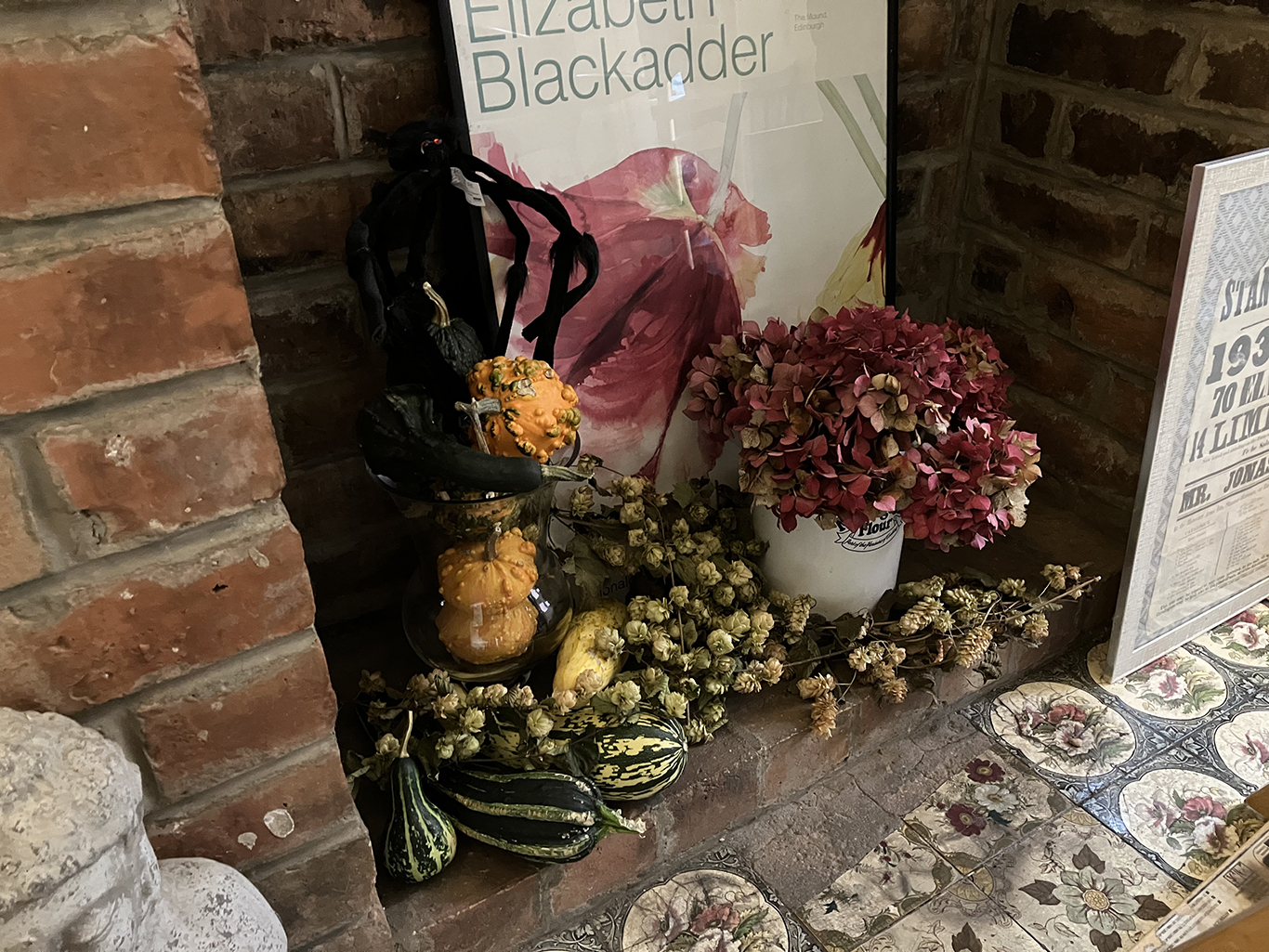
The freezer has come into its own, with the summer’s soft fruit harvest cooked into compotes, crumbles and muffins. I’m drawn to slow-cooked stews, ragouts, chillis, dals; in other words, batch-cooked meat or legume boxes of delights that I can pull out the freezer at 8am on a weekday morning and defrost on the worktop ready for a 8pm 10-minute supper. Weekends give us more time, and there’s often waffles or pancakes on the menu. We’re not quite in winter yet, and the house is decorated with the autumnal harvest of gourds, hops and hydrangeas.
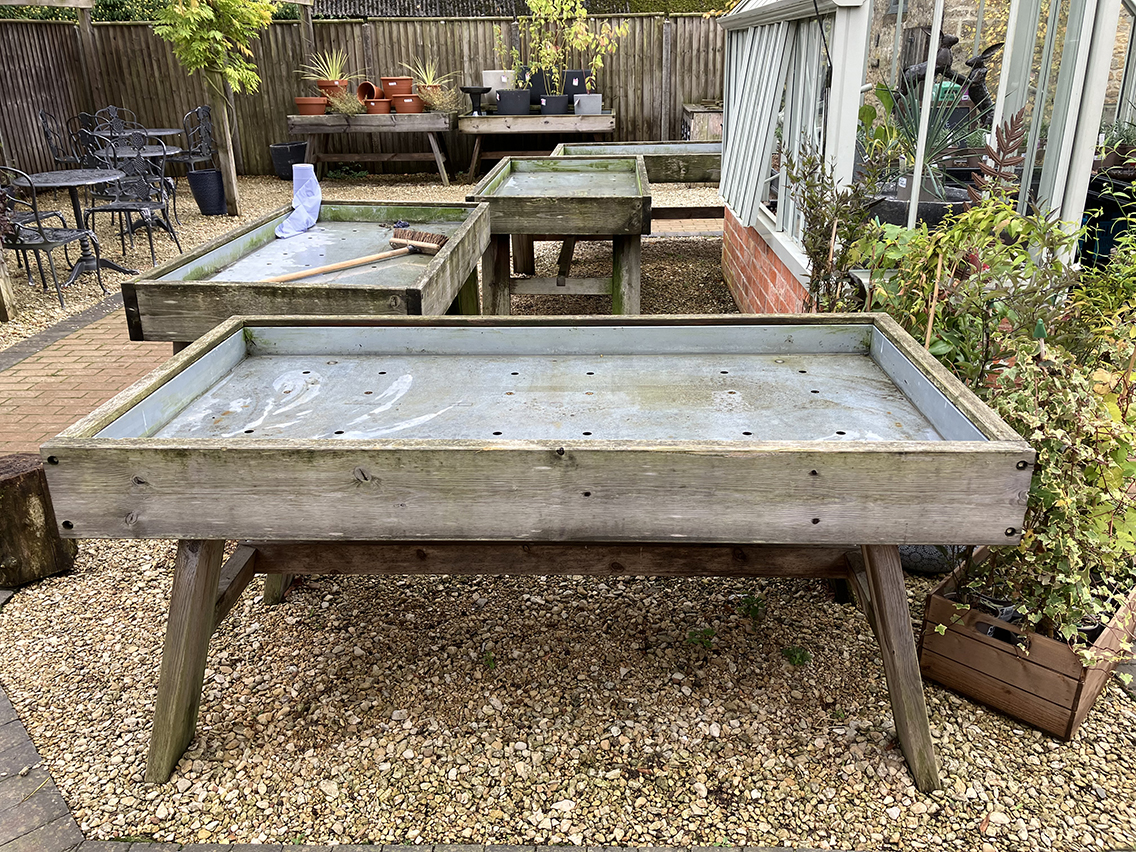
It’s hibernation time now, not least because January means tax bill time so I’m trying to keep a limit on the spend. Having said that, September and October has brought visits to Hidcote, Quainton, Cheltenham Literature Festival, Ludlow and the Young V&A, plus half-term forest school. Ever hungry for new ideas, this propagation table at the National Trust shop looks to me like the solution to all my spring-time slug issues: hard-wearing wood filled with some kind of plastic insert, drilled for water drainage. Practical, pretty and perfect for raising young plants. They’re using it to show off their pots for sale; I’d use it for outwitting gastropods.
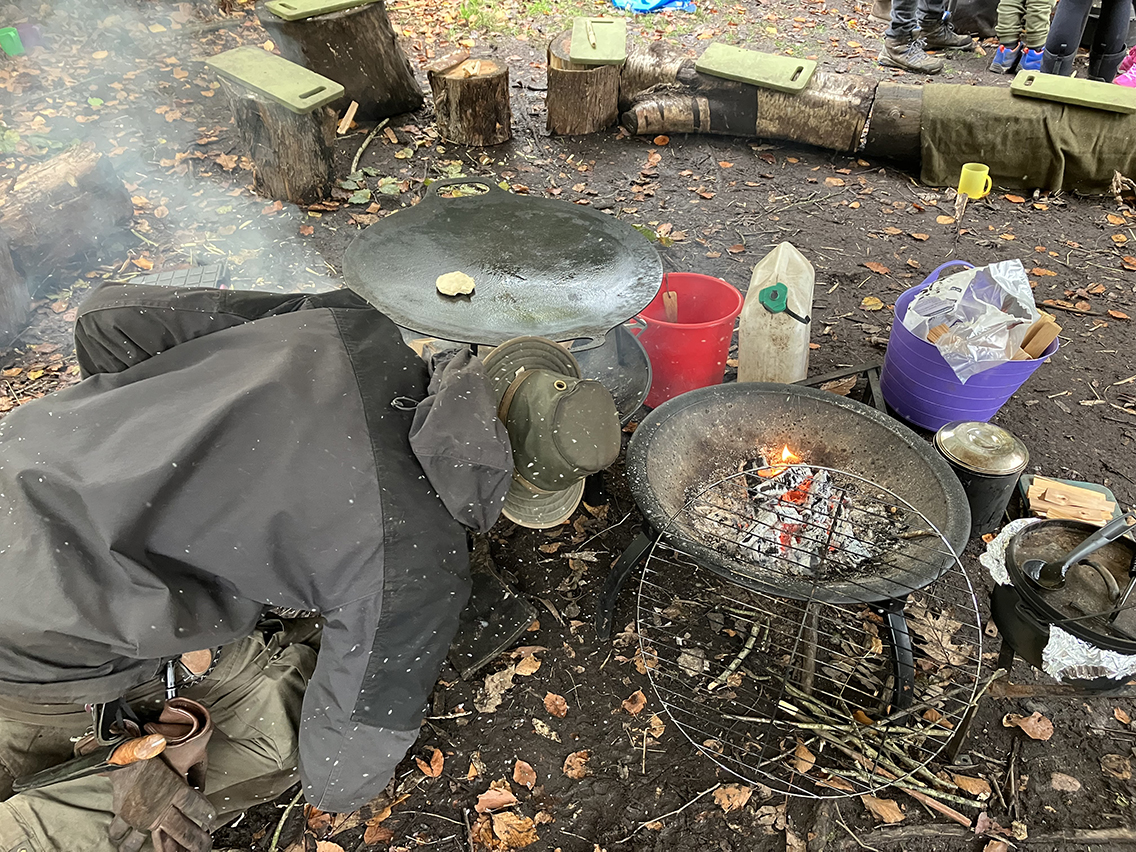
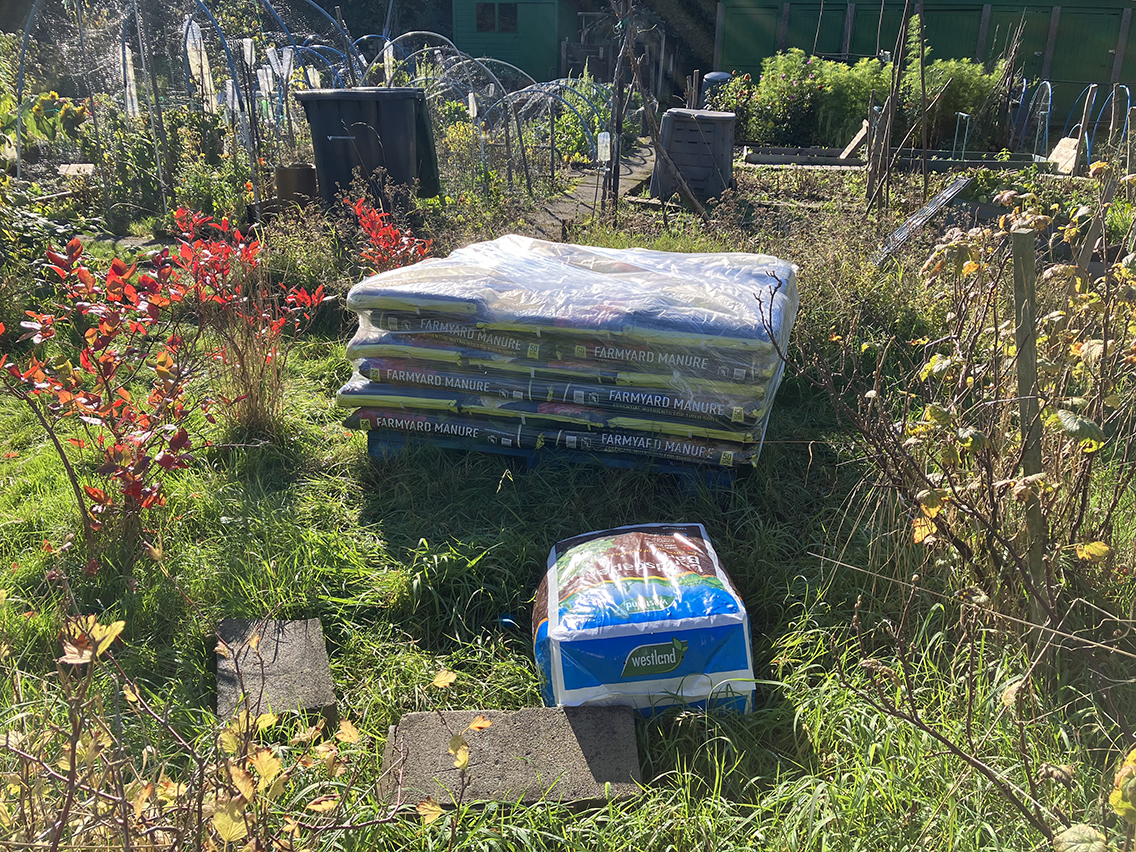
October’s job – and possibly the most important task of the entire year – has been to nurture our tired allotment soil. This year’s harvests have been poor, there’s no avoiding it, and whilst that’s partly due to the wet spring and the slug plague, I think the main issue is that our growing medium has lost its nutrition. We’re organic on the plot – no artificial fertilisers – but I have been remiss in the last few years in getting down a good, thick, nutritious mulch in the autumn. So my hunch is that on our light, free-draining soil, the heavy winter/spring rain has washed away nitrogen. I haven’t tested the soil properly to know if this is scientifically correct, but I have put my money where my mouth is and forked out £200 on a pallet of good manure. As the light faded and the last flowers were harvested, so up came the last of the annuals, and down went bags and bags and bags of poo.
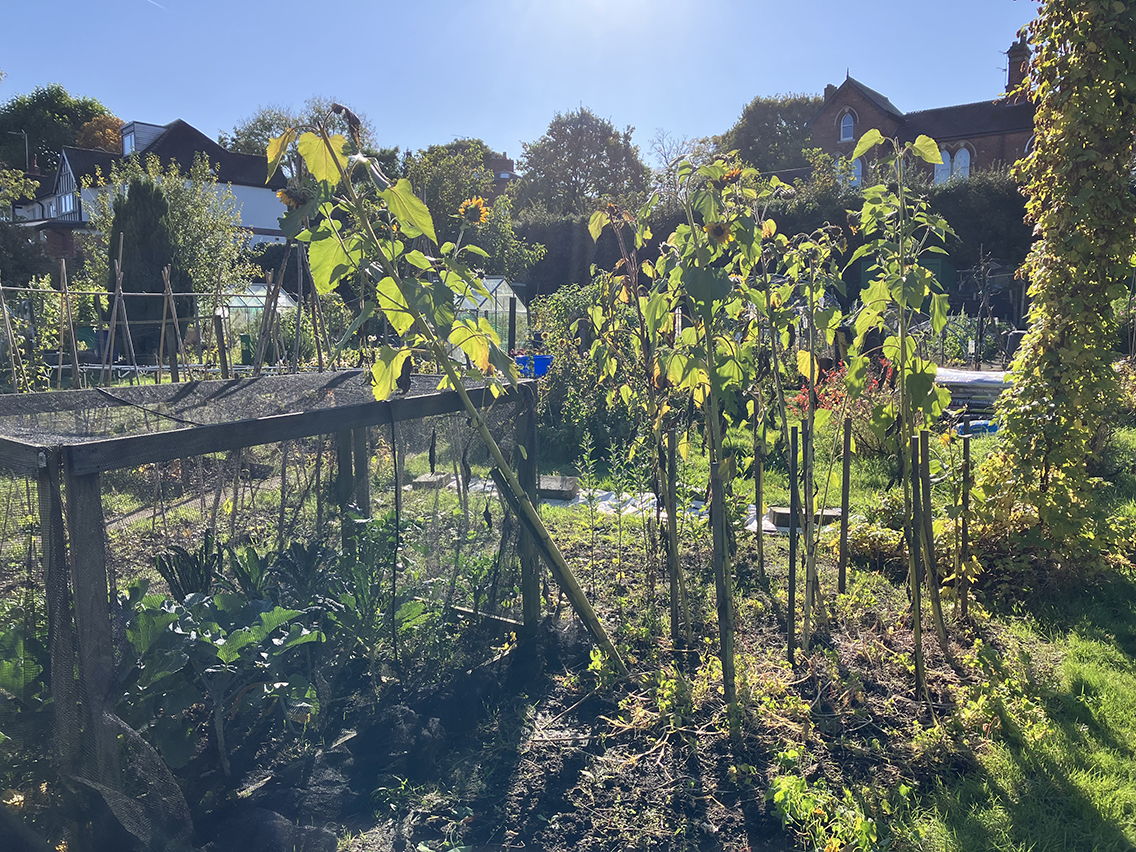
My rule for muck-spreading is that any really nasty weeds, such as brambles, get dug out, but anything ephemeral/annual gets covered. The idea is that it will rot down over the winter and give more nutrition back into the soil; the other thing is that frankly I’m a bit lazy. This manure has been spread several inches deep, then black plastic went on top and will stay there until late spring, when I’m ready to plant out again. It only feels a few weeks since it came up; it’s been a short growing season, I think.
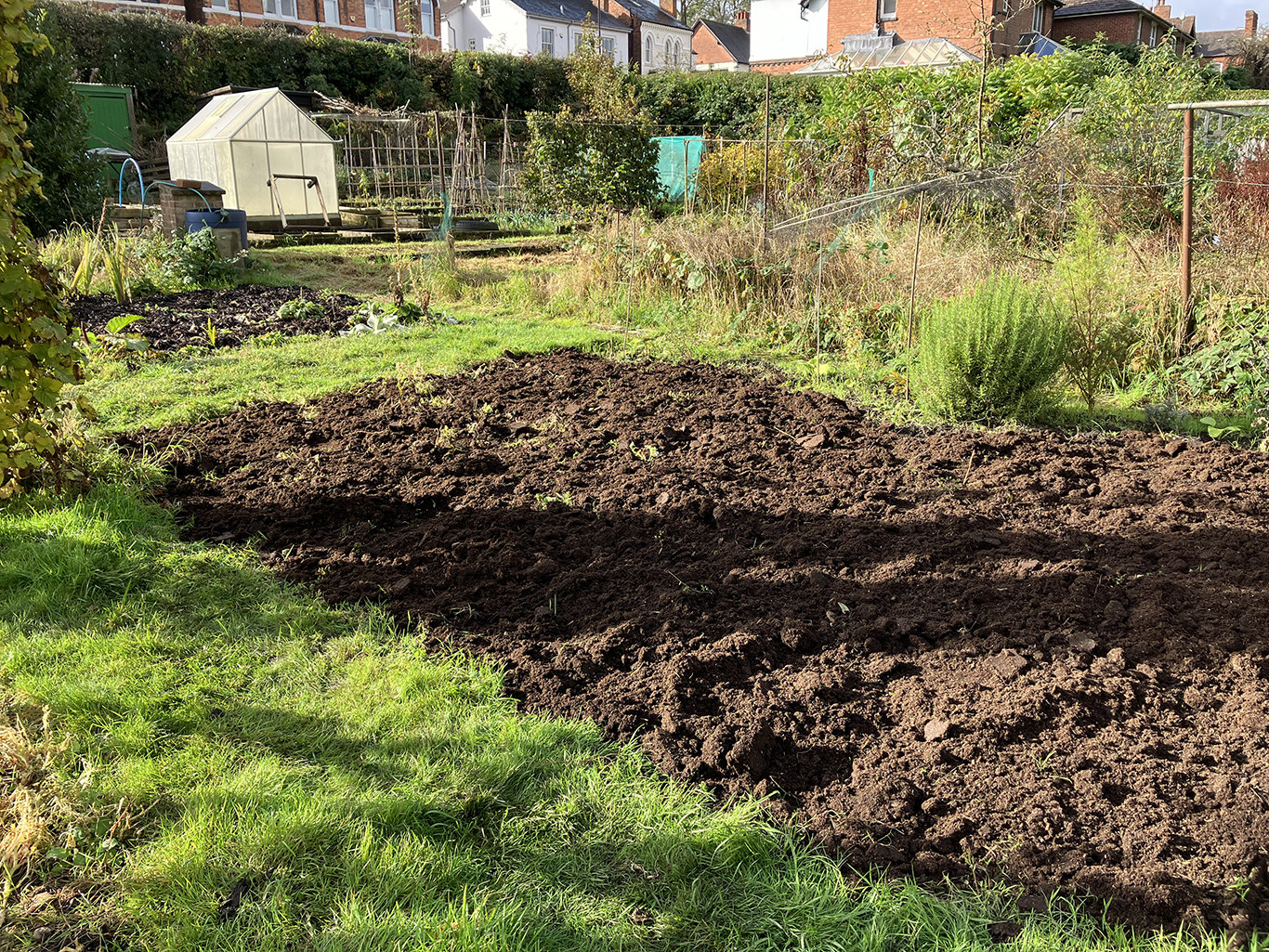
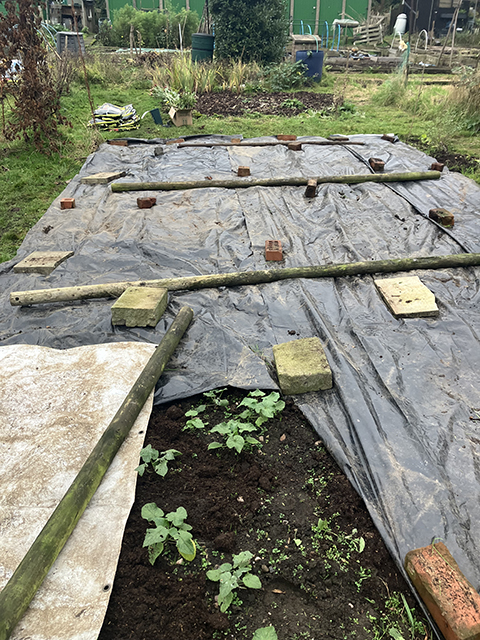
There’s a few biennials in there that I’ve left be (lunaria, sweet william, sweet rocket) and the brassica cage obviously stays until the PSB is harvested in March. I’ve also put bark down on what used to be called the dahlia patch, not that there’s any dahlias in there anymore (I’m still reeling from the slug apocalypse). Instead I’ve planted in teasels, peonies and foxgloves, and come the spring I may put in some more perennials. We’ll see. The rest of the bark will go onto the raspberries after I’ve cut them back in February, at which point I will no doubt complain for weeks-on-end about all the sodding brambles that just refuse to die. Remarkable plants that they are.
This is not the end of course. The brambles next to the shed are now threatening to fully encase it, which is not ideal, and there’s our old friend the creeping buttercup to deal with. I’m less bothered by these now that I understand just how vital they are to support invertebrates ; this little patch of land part of an ecosystem that we need to support not destroy.
The other main task is to keep positive in the darker months, plotting and planning for the return of the light.
Also this month:
Harvesting: Not my harvest, but Matt’s 97-year-old Aunty Rita gave me a big bag of apples that I’ve now peeled, cored and sliced into the freezer. There’s still cavolo nero on the allotment, and chard and celeriac from my parent’s veg plot. AND a perfect cauliflower from Matt’s Dad. Picked up a few squash that were being sold for halloween.
Jobs: Planted out hundreds of narcissi, allium and tulip bulbs, then watched the squirrel steal them all. Planted perennials into the garden (persicaria, geum) and waiting on the new bare-root rose to be delivered. Lifted the remaining dahlias. Tidied the sun room for over-wintering tender pot-plants, such as bay and pelargonium.
Cooking: Quince and apple crumble; spiced fig and blackberry jam; lots of puffy pancakes with blueberries; slow-cooked pork shoulder; mutton ragout with cannellini beans; 5-veg-tomato sauce for Harry’s pasta; chicken, celeriac and sweetcorn chowder; chard and potato curry; dal with butternut squash and spinach; cinnamon-bun-bread pudding; tried to make a biscoff cake but it needs more work.
Also: Navigating the end of old and start of new contracts (it’s been like that all year really); visited newly reopening Birmingham Museum & Art Gallery, Young V&A, Forest School, Cheltenham Lit Fest, Ludlow, Quainton fireworks. Reading Landlines by Raynor Winn. Loved Ludwig on the telly.


